Saturday, March 26, 2011

Monthly Slow News Summary: March 2011

Slow Design:
Slow Fashion:
Slow Travel:
Sustainability:
Slow Living:

Sunday, March 6, 2011

How-To: Manage an Epic Wardrobe Purge

I've written previously about fashion diets. Today I thought I'd share my journey so far with mine. 


My story will be quite different from that described by most of the perky world-travelling twenty-somethings who are blogging about minimalism. I've just turned forty, I've lived in the same city since 1994, and I've lived in the same single-family home with lots of storage for just over a decade. I'm temperamentally inclined to be a packrat: I save things for sentimental reasons or because I'll need them someday, I hoard craft supplies and half-finished projects, I go antiquing and collect select items, I buy too many magazines, and I have a mini-library in my home. I have children, and all the piles of kid-art and boxes of toys and things bought by well-meaning relatives that go with having children. I live in the suburbs. I own a fleet of vintage bicycles, in various states of repair, but I also ferry my kids around in an SUV. I do not have a single e-book I want to sell you.


So, yes, my fashion diet experience will definitely be different from someone who is at a very different stage in their life. 


My wardrobe hadn't been re-evaluated in at least five years, and in that time I have worn a range of four sizes (thank you, second pregnancy), gone through a phase where I decided that I need to stop dressing like a grad student now that I don't spend long working hours in a research lab (so I now have both lots of dress-like-a-grown-up clothes and lots of casual clothes), and brought a slightly ridiculous amount of clothing home from thrift stores. My closet was overflowing; it would be only a slight exaggeration to have called me wardrobese (heh, get it?). I can only imagine the closets of acquaintances whose primary hobby is going to the mall. 


I want a great capsule wardrobe; I love the idea of having a few key high-quality pieces that coordinate with each other, instead of a closet full of clothes that don't work for me. I'd like to spend less time on figuring out what to wear, and look more polished. I live in a four-season continental climate where the temperature extremes go from roughly -40 to +40 Celsius, often swinging by 20 degrees in a day, so for practical purposes I need a capsule wardrobe for each season. 


Hanging space after the purge.
This will look much less crowded once the stuff for other seasons is packed away.

Shelf space after the purge. 
These were literally overflowing at the start of the process.


Here are the steps I took to get one:


Stage 1: Make sure that every piece of clothing I own is clean. This was not trivial. I have a busy family with young children and a puppy, so there is always a huge pile of stuff waiting to be washed and another pile waiting to be folded. Often if things don't get folded quickly enough, they need to be rewashed because the kids have climbed on the Laundry Chair, dumping things onto the floor so that Miss Sheds-A-Lot can nest in them or tromp on them with snowy paws. This means that anything that needs special care waits absolutely forever before it gets cleaned - and so the pile of clothing that needs to be handwashed or hung to dry just gets bigger and bigger. It had grown large enough to fill two hampers. I wish I'd thought to keep track of the exact time it took me to get it all clean, as it would be a terrific object lesson in the wastefulness of having too much stuff. It took me many hours spaced over five days.


Stage 2: Presorting. Next I went through my whole wardrobe and presorted it into several categories. Anything I was unsure of, I tried on and got my daughter's opinion: you can count on a seven-year-old for honesty on fit. I sorted into 4 main categories: things that fit properly (put back in the closet), things that are too small (filled 1 photocopy-paper box), things that are too big (filled another photocopy-paper box to overflowing), and things to store (yet another box). This last category is reserved for things I'm keeping for sentimental reasons, like the sweet little black bias-cut crepe dress my genius sister had all her bridesmaids wear, and a couple of timeless pieces sewn by my Mom that I hope my daughter will wear one day. There is also a bonus category, of items that went into my mending basket at this point; only a couple of irreparably damaged things got thrown away. I plan to spend an afternoon soon mending things, then trying them all on and deciding which category they belong to.


Stage 3: Get objective second opinions from my inner circle. This took all evening and was actually tremendous fun. My friends were fantastically complimentary when something looked great, and ruthlessly honest when something needed to go. They raided my big boxes of castoffs to see if there were any gems that fit them, and each went home with a big bag of clothes that look way more stylish on them than they ever did on me. They helped me weed out the stuff that fits my body, but doesn't fit my lifestyle or go with anything else in my closet. Since I am losing weight (honest), I also kept a minimal number of good-quality pieces in the next size down from my current size. Warm autumnal colours and neutrals stayed; the vintage schiaparelli pink velvet blazer found a new home. 


Our criteria at this stage were the usual capsule wardrobe criteria, with a slow-fashion twist:

  • Does it fall within my colour palette for that season (since my different seasonal capsule wardrobes have slightly different palettes)?
  • Is it a flattering cut for my figure? Does it read as sophisticated (vs too young for me), and either timeless or on-trend?
  • Can it be custom-tailored or embellished to create something more timeless or figure-flattering?
  • If it needs special care, do I love it enough to make it worth the hassle? 
  • Was it bought vintage, or locally, sustainably, and/or ethically produced? Can I imagine still wearing it in another ten or twenty years?
  • If it was not sustainably or ethically produced, will I wear it enough times to mitigate its hidden environmental and social costs (through its durability and classic styling)?

If the answers to these questions were yes, I kept it; if they were no, I passed it on to someone who will (hopefully) answer yes.


The numbers at evening's end: 
10 items stored for posterity (in fairness, there is more at my parents' home),
8 classic items stored in the size below my current size, 
3 items to be tailored or remade, 
24 oversize concert-souvenir t-shirts boxed (to turn into a quilt),
29 items given to my three fabulous friends, 
12 items set aside for another friend who couldn't attend, 
35 items donated to charity, 
1 large bottle of wine (plus several cups of coffee and tea, a pizza, and two giant chocolate bars) consumed, 
4 articles of clothing rediscovered that I had completely forgotten I owned, and
19 timeless items purchased second-hand that made the cut.


Stage 4: Make a wish list of any items that are missing from my seasonal capsule wardrobesAs outfits were tried on, one of my friends kept a running list of items I should look for to complete my wardrobe. For me, those items were navy blue trousers, a crisp white tailored shirt with French cuffs, a fitted vest (waistcoat) and camisole for layering, a navy accordion-pleated skirt, and sundry accessories (primarily belts, which I hate shopping for). Luckily for me, there's a lot of navy blue in the shops right now. Naturally my slow-fashion criteria will apply when I shop for these items.


Stage 5: Figure out what I'm wearing all the time right now, in the coldest part of winter. These items will need to be part of my winter capsule wardrobe next year, and some of them will be seasonless enough to be part of my year-round capsule wardrobe. 


I noticed as I sorted my clothes that I wear more black and grey, and more velvet, in fall and winter; for warmth I often layer black leggings or jeans under skirts and dresses. On any given winter day I wear enough outerwear to exclude me from ever managing a Six Items Or Less stint, unless they change their rules so that outerwear doesn't count.


I'm done to this point at the time I wrote this post. Next steps:


Stage 6: Determine what my 33 items are for Project 333, for the April 1 to June 30 dates. The 33 items include clothing, accessories, jewelry, outerwear and shoes - but not day-to-day jewelry (my eyeglasses and the 3 rings and 3 hoop earrings that I practically never take off), undies and socks, pajamas, or workout clothes (which will double as loungewear for me). I'll trial-run my 33 items in March, and do a separate post about my choices. Since the weather will be shifting from still snow on the ground to early summer temperatures during the 3 months, I'll be dressing in layers and using the bonus rule of allowing myself to rotate in three warm-weather items (a light jacket, a pair of sandals) and rotate out three cold-weather items (my down coat and winter boots). I'll also call time-out on my 33-item wardrobe and use a different, even more limited wardrobe for my trip to Japan in May (which will mean dressing for higher humidity and temperatures I usually see in early July at home).


Stage 7: Pack for the Japan trip. My travel wardrobe will be a version of the capsule wardrobe I would choose for summertime, but limited by what will allow me to pack light, handwash and hang dry as needed, be comfortable doing lots of walking, and look suitably stylish for both the day-to-day stuff and some romantic evenings on the town. I'll probably be leaving all my black at home and packing navy blue instead.


Stage 8: Put more things in storage or give them away. Stages 6 and 7 will allow me to whittle down my wardrobe even further and set aside an additional few items to be given away, while the rest will get packed up for a few months, after which I'll see if I missed them and decide upon their fate.  


I have to say, at this point I'm feeling so happy to have found new homes for clothes that weren't working for me, and to have so much more room in my closet. I'm really stoked for the upcoming stages of this process. At the ends of June and September I'll probably decide to do additional rounds of Project 333, which will help me to further narrow my choices and define my personal style.

Monday, February 28, 2011

Slow Fashion: Of LBDs, part 2

Last post I talked about the Uniform Project (UP) and the Bright Young Things (BYT) version of Sheena's UP Year 1 little black dress (LBD). The post got a bit long, but in the interest of full disclosure:


The BYT LBD in the Fall 2010 issue of Boho magazine. So flattering, so versatile.
I have the BYT Premier Edition version of Sheena's UP dress, in XL, purchased about a month before UP started selling their updated version as The Classic LBD. It's super cute on, though shorter than I prefer, even for a minidress. The cut skims away from the belly and hips, and the weight of the cotton pique stretch fabric is great for hiding any perceived figure flaws. From the photos it looks like Eliza from BYT used a lighter fabric with more drape for the Spring 2011 capsule collection. (I think the fabric used for UP's Classic LBD drapes better, too.) 

The button at my bustline after the last wash.
THAT ain't right...
The screenprinted care instructions on a pocket of the BYT LBD.
Tumble dry low heat? Oooooops.
Unfortunately, my LBD has shrunk by about a size on me! It got accidentally sorted into the general black clothes pile on laundry day, and thrown into the dryer. It was already quite a tailored fit, so I really can no longer wear it. My loss will be a friend's gain, but before I swap it, I took some photos of me in it so you can get an idea of the fit. Please keep in mind that the BYT Premier Edition has now sold out, and it's not clear to me how the version she's selling in her Spring 2011 line differs (the fabric looks lighter and less stiff), or how the version now selling on the UP site differs in fit.

Worn unbuttoned as a jacket - LOVE this look (especially with a belt on top).
I'm wearing it over a tunic-length t-shirt and black denim slacks.
If you know the dress from other bloggers' photos, 
you can see that it shrunk in all directions, 
losing about an inch in both length and width.


Buttoned partway, so you can imagine what it looked like when it fit. 
(When I also buttoned the offending button shown above, 
it distorted the dress' lines.)


To show how the fabric tends to bubble out over my butt, thanks to the pleat opening starting at the small of my back instead of further down. If I was keeping it, I'd stitch up the pleats by hand so it would be more fitted.
(Wearing it back-to-front never worked with my busty figure.)

Lucky for me, I also bought the sewing pattern which UP are selling, which as you can see came packaged in an adorable and useful tote bag. I was thinking I'd like to make a longer version (I'd be more comfortable with the hem an inch above the knees), in equally-timeless navy blue or indigo, in a lighter fabric for summer, with a couple of different collars to help add more variety - but now I'll need to make a replacement in black as well. 


I guess the moral of my sad story is, definitely handwash and hang dry these dresses - and if your lifestyle means that's impractical, consider buying the pattern and preshrinking your fabric before you sew.

Friday, February 25, 2011

Slow Fashion: Of Fashion Diets & LBDs

Slow Fashion can mean many things: a timeless or flexible cut that means you can wear it for longer; the use of high-quality and/or environmentally-sensitive fabrics, and socially- and environmentally-sensitive production techniques; buying vintage or swapping with friends; incorporating local crafting traditions into the design, or using local labour for the manufacture; making, embellishing, or mending your clothes yourself; or having your clothes custom-tailored (or knit or crocheted). Essentially it involves taking the principles of slow design and applying them to your closet.

Lots of people are blogging about their slow fashion resolutions, which have been dubbed 'fashion diets'. Kim at Preloved Reloved (via the Jorg & Olif blog) is going to buy only second-hand clothes for a year. Participants in Six Items Or Less are blogging about whittling down to, and living with, only 6 items of clothing for a month. Participants in The Great American Apparel Diet are not buying new clothes (but are allowed new accessories and gifted items) for a year; Australian blogger Kate from Fashion Fasting tackled the same challenge last year. Participants in Project 333 wear 33 items or less for a 3-month period. I'm sure there are many more individual bloggers I haven't discovered yet, since fashion diets and fasts have become popular enough that the idea has been covered by Trend Central and the New York Times. (Please, feel free to mention anyone I've missed in the comments!)


Perhaps the best-known fashion fast involves something most women already have in their closet: the essential Little Black Dress first designed by Coco Chanel. In year 1 of the Uniform Project, Sheena Matheiken wore a single versatile LBD (well, 7 copies of it) every day for a whole year, styled to create hundreds of different looks using only items that were already in her closet, or donated items that were either vintage or handmade. She was inspired, in part, by how kids who wear school uniforms always manage to find an inventive way to make the look their own - and she used the project as an inventive fundraiser for the Akanksha Foundation, who educate children living in slums in the Indian cities of Pune and Mumbai and are co-organizers of the InspirED conference on innovation in education for India (I highly recommend that you check out Sheena's TEDxDubai talk - hugely inspiring stuff.). Now that Sheena's year in the LBD is done, the Uniform Project has moved on to one-month Pilots where people wear one outfit for a month to fundraise for a cause of their choice, with the new outfit design (mostly LBDs, but also a jumper and a two-piece suit, so far) being sold on the site. They also sell a new version (tweaked for fit) of the dress that Sheena wore (and a sewing pattern for it). That is also the dress that One Dress Protest's Kristy Powell is wearing (without accessories) this year; Kristy's year in an LBD also differs from Sheena's in that instead of posting daily fashion photos, she's blogging about her thoughts and peoples' reactions to the sociological and philosophical implications of the project. 

Meanwhile the designer of the original version of the Uniform Project dress (Eliza Starbuck) also is selling it as part of her capsule collection through her Bright Young Things website, and profiling buyers who are doing one-month Wear-a-thons. 

You don't have to go on a full-on fashion fast to take a slow fashion approach to your wardrobe, though. Start simply, by going through your closet, keeping the stuff that fits well and makes you feel great, donating what you never ever wear, and thinking differently about what you buy. (Recent stories in UK newspaper the Daily Mail suggest that the average woman has 22 things in her wardrobe that she never wears, 12 of which don't fit. Wow.). I think the advice for creating a timeless capsule wardrobe in these two posts is a fantastic place to start (boys, try this link instead). 

Inspired by what Sheena of the Uniform Project has done, a friend (hi Asia!) and I planning a ladies-only fundraiser tweetup where everyone shops their closet, and wears a basic black outfit, accessorized creatively to showcase their personalities. We thought a cocktail party like this could be an amazingly cool way to simultaneously fundraise for Uniform Project's charity of choice and a local charity  (Like, cool enough to inspire copycat events in other cities.). We're calling it the Little Black Dress Party (or, #yegLBD using the hashtag convention of #cityEVENT); likely in April, with the date to be announced once we nail down the venue. I'll do another post with all the details then.

I'm also following my own advice and cleaning out my closet, and plotting which fashion diet to join. The prospect of using a big purge and one-month-or-more challenge to help define my personal style and explore my relationship to fashion and consumerism is really exciting!

Thursday, February 24, 2011

On Trends and Slowness

Jenny at Little Green Notebook has started a compelling discussion on her blog, about how being a design blogger (or a devoted blog reader) makes one hypersensitive to whether an interior design trend is 'over' before it has even hit the mainstream:
http://littlegreennotebook.blogspot.com/2011/02/are-we-overexposed-to-design.html

I had so many thoughts on this that I couldn't summarize them in a pithy tweet or one-paragraph comment.

When you blog daily about a topic, you put yourself under pressure to create original content (or original images), and you become a trendhunter, whether you mean to or not. There is nothing wrong with being on the cutting edge of knowledge in a field. There is nothing wrong with being aware of your average readers' (or clients', or audience's, or friends') level of literacy and expectations about a topic. However, you should never let that awareness alter your writing (or decorating, or fashion sense) so that what you produce isn't an authentic reflection of who you are. Your best work will always be a showcase for your personality, your artistic voice, and your expertise.

Of course that is much easier said than done. Most of us are still finding our voices, aren't we? That's part of why we blog, or keep journals and sketchbooks and portfolios of our student projects. And it can mean we're unduly influenced by trends.

For me, part of finding my authentic voice and design vision is exploring the slow movement. It can be really tricky to incorporate the principles of the slow movement into the parts of your life that tend to be trend-driven. The worlds of fashion and decor are ruled by novelty, consumerism, and marketing; if they weren't, we wouldn't give a sweet damn what colours the industry experts have forecast, or whether our shoes have round or pointy toes. Furthermore, marketers are speaking to our deepest desires when they craft their messages for consumers. Our clothes are a marker for the tribe we belong to, or the tribe we want to belong to; we don't just buy fabric to cover our bodies, we buy our identities and our aspirations (Kristy at One Dress Protest has recently done a genius post about the blurry line between fashion and tribal uniform.). We tell ourselves a story about the life we wish we lived, and we shop for housing and furniture accordingly. We aspire to be slim and healthy, and we buy exercise equipment that gets used mostly as a clothing rack. We want to appear worldly, so we buy a ceramic replica Buddha statue and put it on the fireplace mantle or in a garden bed. We want to appear well-read, so we buy classic literature and glossy art history books and display them prominently on our shelves and coffee tables. We want to be stoic and cheerful about the Current Economic Uncertainty so we buy posters and coffee mugs emblazoned with World War Two propaganda.

Source. Yeah, I own one too.

Don't get me wrong: this is no anti-consumerist rant. There's nothing wrong with expressing ourselves and manifesting our desires through our purchases, or with craving novelty, provided that we do so in moderation. Those are universal impulses. However, these realities can make choosing or blogging about slow fashion or slow decor a delicate balancing act. How do you keep your home and wardrobe current enough to keep them from feeling stale, without treating their contents as disposable? How do you present interesting new trends without becoming a pawn in a corporate marketing strategy, or broadcasting aspirations that conflict with the whole point of the slow movement?

The slow movement isn't about the self-deprivation of buying nothing; it's about becoming a mindful consumer. It can mean being more self-aware and thinking hard about why you want to buy an item and whether you'll really use it. It can mean buying fewer, higher-quality items (and the different sort of abundance that brings into your life); buying locally-made and sustainable items; buying handmade or custom-made; choosing timeless or durable styles; or buying vintage or antique (Hopefully more than one of these criteria will fit your purchase!). It might mean choosing easy-to-live-with neutrals for your home and wardrobe, and bringing in trends through thoughtfully-chosen accessories - or it might mean fearlessly embracing your signature style and your favorite colours, and only buying what you truly love.

(I'll be posting specifically about applying those ideas to my wardrobe in the coming week.)

So, back to those overexposed trends in blog-land... As I've already confessed, I have a Keep Calm knockoff coffee mug. Yup. That poster design has become ridiculously ubiquitous, but my grandparents met in London during The Blitz - and my Dad was born there. For me, it has a special resonance, and it doesn't matter that it's So Over. I bought it because I love it and it's meaningful.

So for me, a Keep Calm mug is the perfect object to represent both overdone trends and slow design principles. What trend that's So Over has become a cherished object in your life?

Wednesday, February 23, 2011

Monthly Slow News Summary: February 2011


On Slow Food and Permaculture:


Time magazine wrote about how the green movement in the States is being eclipsed by the Slow Food movement. I think they kind of created a false dichotomy between the two movements, but isn't the change being created by peoples' interest in food exciting? Maybe the reason for the split they perceive is that for Americans, environmentalism has become an issue of the political left, while food is more apolitical.


The Bodega Chronicles summarized the challenges for the official Slow Food movement in the United States in helping with food justice policy issues, like inner-city access to healthy food. Definitely worth a read.


There is an uproar in the permaculture and backyard farming communities over the controversial trademarking of the terms "urban homestead" and "urban homesteading", which have been commonly used by the successors of the back-to-the-land movement to describe what they're doing for decades (the phrases have possibly been used since the late 1800s, according to some critics). The controversy is as much about the inappropriately draconian way in which the trademark holders have had Facebook fan pages of other businesses shut down, and sent letters threatening legal action to recreational bloggers using the terms. You can read about that case study in how to swiftly alienate your target demographic here, among many other places. My take? It's only a matter of time until the trademarks are overturned by the courts, and the trademark holders have already irreparably damaged their brand through their actions (I am quite deliberately not naming or linking to them.). Karma's a bitch.


Chef 2 Chef wrote a brilliant synopsis of Slow Food International's guiding principles in their Five Ways to Live Slow article. 

The FoodCorps project will educate children in American communities in need through school garden and nutrition projects. Fantastic stuff, given the proven benefits of school gardens and school cafeteria reforms.

Meanwhile the Canadian federal government has taken a step in the opposite direction by caving to food industry pressure and disbanding the task force on sodium reduction. Sigh. 


via cubedtv.com, 
wherein the marketers for an SUV co-opted the slow movement.
Great poster though! No wonder so many slow bloggers are using it.


On Slow Fashion: 

On Slow Travel:
On Slow Living:
On Slow Design:
On Sustainability:

Monday, February 21, 2011

Slow Living: Urban Homesteading

The slow food movement and green movement are interconnected in many ways. One such commonality is the renewed interest in local food. Sales of vegetable seeds and seedlings have climbed steadily in the past few years on both sides of the Atlantic, and people who don't have growing space of their own are flocking to farmers' markets, joining community gardens, and buying shares in community-supported agriculture (CSA) plans. These are great ways to decrease your carbon footprint and move toward greater local food security (which is highly desirable for a variety of reasons), in addition to supporting the slow-food ideal of cuisine based on local, seasonally-available foods.

There are an increasing number of people who are going beyond supplementing their diet with homegrown tomatoes, and using the methods of organic gardening and permaculture to grow larger amounts of food, and keep bees and small livestock, in urban and suburban backyards, front gardens, rooftops, and balconies. This movement toward a do-it-yourself, self-sufficient lifestyle is usually called backyard farming or urban homesteading ('Urban farmer' seems to be used popularly to describe only those members of the movement who are selling their produce to the public or restaurants.). There's a great article on the benefits of urban homesteading as a lifestyle on Helium; it's often being done by people cultivating other traditional skills (such as canning, soap-making, and spinning) connected to their harvests. Articles about urban homesteaders have recently appeared in such mainstream print magazines as ReadyMadeNatural HomeCountry Livingthe Atlantic Monthly, and Natural Life - and urban homesteading has spawned its own print magazine title, Urban Farm, and the digital title Urban Sustainable Living.   

(Incidentally, today is a day of blog action in response to the controversial trademarking of the commonly-used-for-decades terms "urban homestead" and "urban homesteading" - if you are interested, you can read about that case study in how to swiftly alienate your target demographic here.)


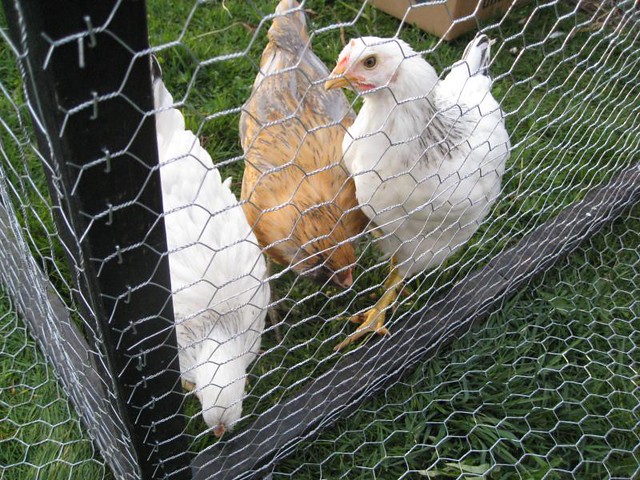
Green Garden Girl's urban chickens, via her flikr feed.

There is something really attractive about the idea of living off the land, even when the land in question is measured in square feet instead of acres. I love the thought of living a fully handmade life, composting all my kitchen scraps for a vegetable patch that feeds my family, planting an apple tree to join our prolific Evans cherry tree for a wee orchard, sewing my kids' clothes, and collecting fresh eggs every day. I love the community-building aspect of the movement, and the idea of trading skills and produce and things I have made by hand with my neighbors (or other community garden or permaculture club members) in order to move away from a consumer-driven existence. I love the activist aspects of the lifestyle as well.

However, that image isn't my reality, yet. For starters, our adopted puppy shows strong bird-dog instincts... so, so much for raising hens in my yard. My children are young enough that what time I have gets spent on day-to-day drudgery instead of inspiring handcrafts. My backyard veggies have withered during the midsummer droughts during the past three years thanks to my unreliable watering (thank goodness my peonies are drought-tolerant). My husband repeatedly killed my outdoor compost pile by dumping all the lawn clippings into it at once, and I consoled myself with the knowledge that my municipality would compost it as I bagged it up and dragged it to the curb.

So, I have great intentions, but much to learn about permaculture - which is okay, since complete self-sufficiency isn't one of my goals. Every summer I use the sour cherries to make wonderful ice creams and pies, and my young children help me to plant seeds and seedlings and water and weed them, and sometimes we get enough herbs or salad greens or corn for a meal or two from our own garden. I also have wonderful bouquets of peonies and irises from our garden in early summer. The kids are learning about where food comes from, and how plants grow, and why we like the spiders but not the slugs, and some simple organic-gardening concepts; this year my eldest will get to design her own little veggie plot in the back corner. We're researching vermicomposting versus bokakshi composting to determine whether those systems would work better for us. I'm working out what to plant in place of the now-shaded strip of front lawn, and thinking that veggies in container plantings would give me the most flexibility.

A late-June bouquet of my semidouble and bomb double peonies 
that I gave to my daughter's teacher last year.

I hope to learn much more about urban homesteading at an upcoming seminar that E-SAGE will be hosting, which I'm helping to organize, called "The Birds And The Bees". Local beekeeper Patty Milligan (of Lola Canola Honey) and members of the RiverCity Chickens Collective will talk about urban hives and coops, and local regulations and pilot projects. Date and location TBA soon!