Showing posts with label Slow Design. Show all posts

Tuesday, April 30, 2013

Bioregional dyeing in Alberta

Lately I've had my nose down, researching what fibres and dyes I can use for my projects that are completely local (I'll save my thoughts on regional fibres for another post.). Although I have used commercially-made acid dyes to dye fabrics in the past, my experience with natural dyes has been limited - so, I'll be blogging about it as I learn. I'd love to grow the dye plants that can be grown here in USDA Zone 3, and also take a bio-regional approach by foraging for dye plants that grow wild here.
rose hips and bark from today's walk
There is basic information about natural dyeing using local plant materials here and here and some inspirational photos here; I'm also now doing more detailed research using the books from this amazing bibliography. Oh, and this link talks about traditional natural dyes used by first nations artisans for porcupine quills, which may provide some more ideas for bioregional dyeing.

My dyeing set-upI'm hoping to work outside when the weather is good, but the ventilation is good in my kitchen when I'm working with nontoxic dyestuffs. I already have pH paper, a big enamel lobster pot, a thrifted glass casserole dish, thrifted canning jars, tongs, a dye measuring spoon, and a set of Majic Carpet acid dyes with formula books in my rug hooking stash. Oh, and a propane camp stove in my backpacking box, and a clothesline that needs to be installed. Yesterday I visited a local art supply shop and added a tjanting tool for batik work and a natural indigo dyeing kit, and ordered some goodies from Maiwa in Vancouver. There may be some additional instuments that are part of the materials for the Surface & Textile Design intensive at the U of A in July (so. very. excited.). I still need to look for second hand: more dye pots, slotted spoons, bowls, and measuring spoons - made of stainless steel or enamel or (if I get lucky) copper - and a kitchen scale and hot plate.

Dye sources I will plant in my new garden (many are also food sources, yay!):
  • Rhubarb leaves (note: poisonous!)
  • Hollyhock 'nigra', for the blossoms
  • Heather
  • Woad (I have ordered seeds from Wearing Woad in BC - a noxious weed here so they *must* be harvested before going to seed)
  • Carrots (I have seeds from Cubits in Ontario)
  • Beets (I have seeds from Cubits) (too highly fugitive)
  • Blueberry
  • Cherry tree and/or pear tree - for the leaves
  • Blackberries - for the leaves, berry dye is fugitive
  • Marigolds, for the blossoms (which coincidentally are our city's official flower - no idea why, since they're not exactly local)
Dye sources to forage locally (many of these are wild or invasive):
  • dandelion
  • goldenrod
  • big basin sagebrush / Artemesia tridentata
  • curly dock / Rumex crispus
  • sheep sorrel / Rumex acetosella (this can give a beautiful green)
  • tansy / Tanacetum vulgare
  • horsetail / Equisetum arvense
  • fennel / Foeniculum vulgare
  • St John's wort / Hypericum perforatum
  • prickly pear fruit
  • elderberry
  • Canada thistle / Cirsium arvense
  • common mullein / Verbascum thapsus
  • prairie sunflower / Helianthus petiolaris
  • rose hips or petals from the wild roses that flourish in the nearby ravine
  • bark from dead lodgepole pine (on a trip to the foothills) or birch
  • fallen leaves from birch or trembling aspen
  • acorns from burr oak (which is planted as a shelterbelt tree on the Prairies)
  • there may be more on the noxious weed list that I can experiment with
  • certain lichens and mosses grow in abundance in the woods near me, so they might also be worth trying
In addition, I can collect wood ash from the weekend bonfires the teenagers have down in the ravine, and dig a little of the red clay that's everywhere here to use as a source of iron. I should also experiment with using our hard local water instead of distilled water to see how it changes the colours I get.

Reference books I am using:
  • Harvesting Color, by Rebecca Burgess (2011) 
  • A Weaver's Garden, by Rita Buchanan (1999)
  • Wild Color (Revised & Updated), by Jenny Dean (2010)
  • Eco Colour, by India Flint (2010)
  • The Complete Guide to Natural Dyeing, by Eva Lambert & Tracy Kendall (2010)
  • The Handbook of Natural Plant Dyes, by Sasha Duerr (2010)
  • Alberta Agriculture's Weeds of the Prairies (2000) for plant identification


Tuesday, October 23, 2012

Slow Design: Veneer Pendant Lamps


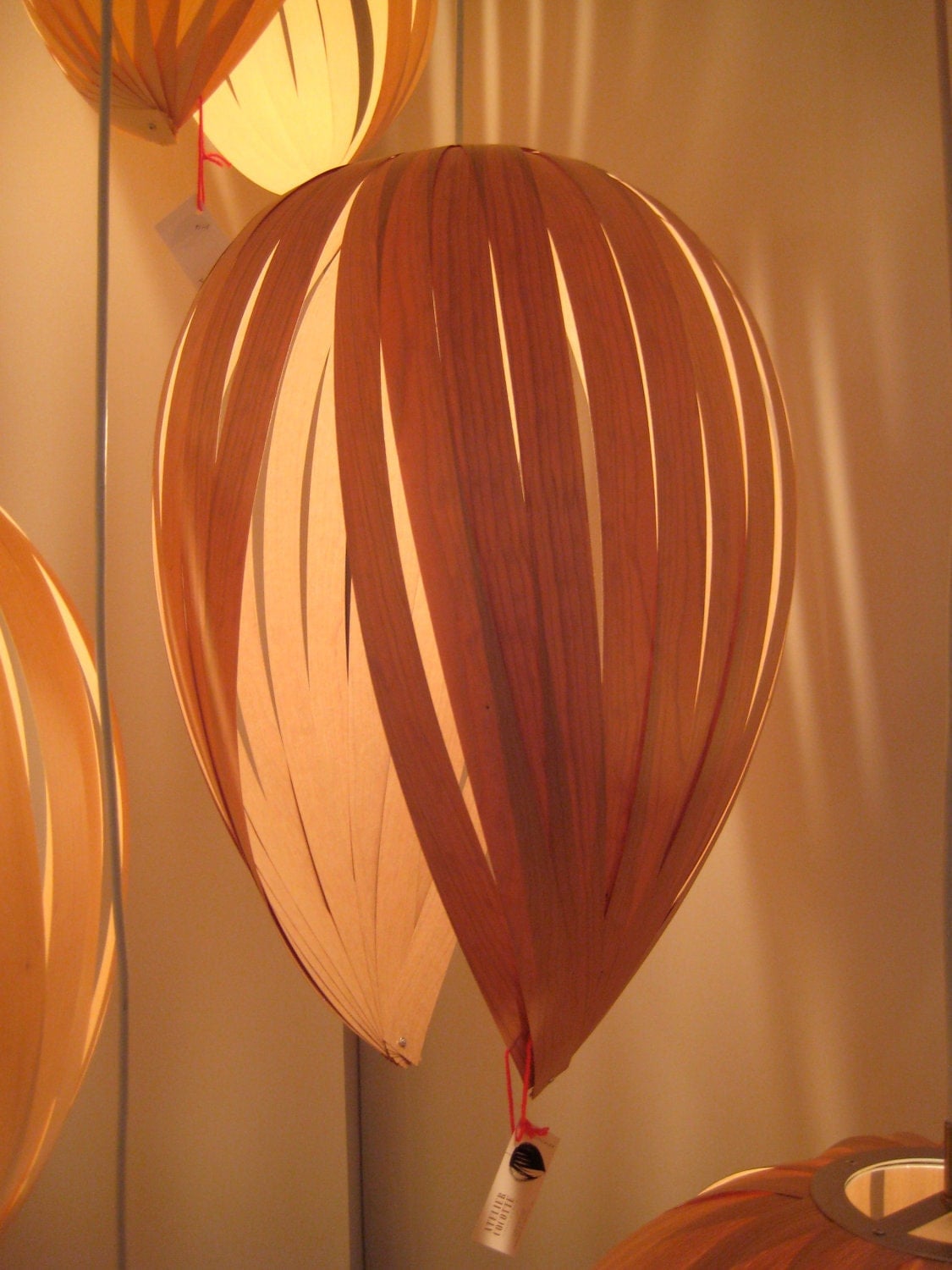
I'm obsessed right now with pendant lamps made of wood veneers. Not only are they gorgeous, they're sustainable - they are designed for use with low-wattage LED and CFL lamps, the production of veneer is extremely resource-efficient (imagine putting a log into a pencil sharpener and using the shavings), and FSC-certified versions are widely available. Here are a few of my current favourites:

David Trubridge's stunning flat-pack bamboo ply Coral pendant. Via Design Within Reach.

Propellor Design's magnificent Meridian pendant, a Canadian design,
which is available in birch or walnut veneer or ecoresin. Via Remodelista.

Another Canadian design, Atelier Cocotte's Gladys pendant in birch veneer. Via Etsy.

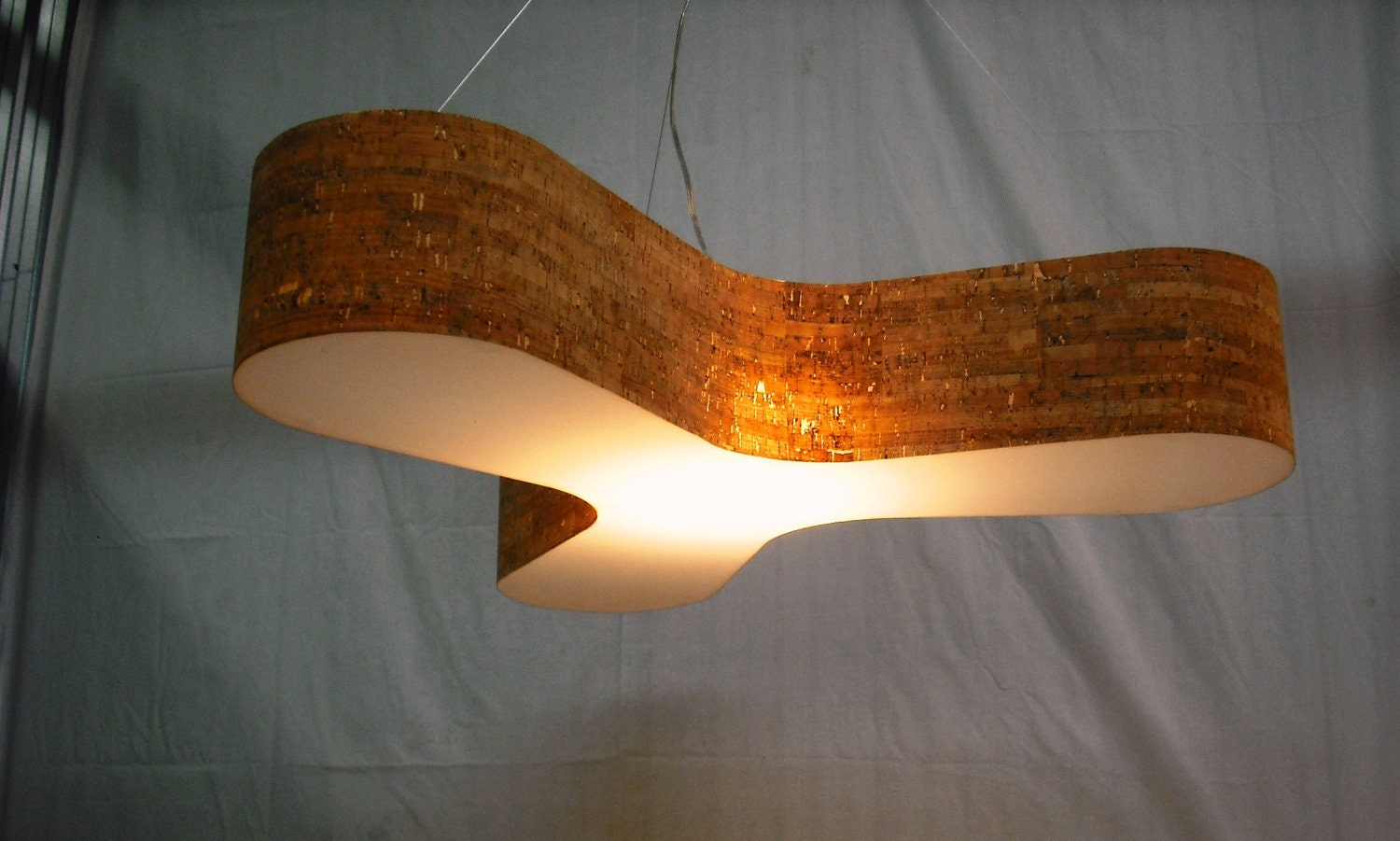
Transfigure's Trinity suspension lamp in cork veneer. Via Etsy.


Flaco lamp by Casper Madsens. Via 79Ideas.

7Gods' Puku lamp, via 42 Concepts. Out of production but Tom Raffield makes a similar one.

Tom Raffield's gorgeous steam-bent veneer globes (Pendant No.1) make me weak-kneed. 

Most of these beauties are in the $500+ range, which is not in the budget right now. However, I do have some prior experience in creating pendant lamps from scratch. So I'm planning to make something myself to replace the yawn over our dining table. The raw materials are affordable, although finding long veneer strips that haven't been backed with paper or glue is more challenging, and ideally I'd like to find a local, sustainable veneer source (I might even need to work with a local mill or woodturner to have something custom-made.).  I figure, I want to try crossing the instructions for a string pendant lamp (I need a ball at least 28 inches in diameter for it to be the right scale for the room, by my calculations), with the instructions for the woven wood veneer lamp (also seen here), throw in some wood bending techniques, and see what the grain of the wood will allow me to do. Stay tuned.

Friday, October 19, 2012

The ABCs of Slow Design

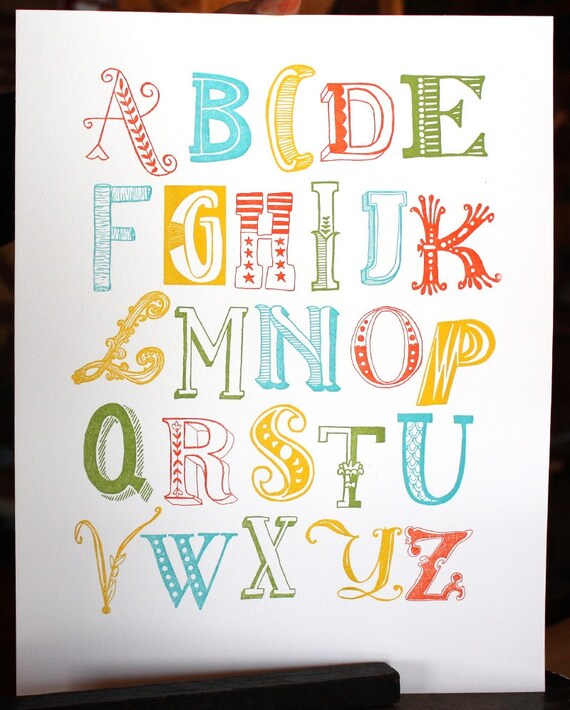
Alphabet Letterpress Print by 1canoe2 on Etsy.

I've been giving a lot of thought to a simple, graphical way to explain the principles of slow design to people who have never heard of it. It occurred to me that, since slow design is collaborative, the best way to achieve that would be to reach out to the slow home, slow design, and slow craft communities to brainstorm a list of adjectives that could then be used to create a typographic poster, or a short message (like SLOW DESIGN) vertically down the back of our business cards.

I'd also love to use this list as the basis for a slow design blog hop! More details on that in a sec.

Sound good? I thought so. Let's get to it.

Slow Design is...
  • Antique, Artisan, Activist, Affordable, Authentic, Adaptive
  • Better, Bespoke, Beautiful
  • Cherished, Covetable, Cradle-to-Cradle, Creative, Collaborative, Community-centred, Charette, ComfortableCaring, Conversational, Curious
  • DIY, Desirable, Durable, Diverse, Democratic
  • Enduring, Ethical, Eco-friendly, Evocative, Engaging
  • Fixable, Found
  • Good, Green
  • Heirloom, Handmade, Healthy, Honest
  • Intelligent, Ingenious, Inclusive, Interactive, Intuitive, Inviting
  • Just
  • Kept
  • Local, Limited-edition, Luxurious
  • Modern, Meaningful, Mindful
  • Nondisposable, Now, NaturalNeighbourly
  • Original, Open-source, Observative
  • Precious, Preservation, Personalized, Participatory, Playful, Process-drivenPlace-making
  • Quality
  • Reuseable, Recycled, Repairable, Relaxing, RealResourceful, Reliable, Responsive
  • Sustainable, Simple, Shareable, Social, Smart, Soulful, Skill-building, SeasonalSensual
  • Timeless, Traditional, Thoughtful, Transparent, Terroir
  • Upcycled, Useful, Uncluttered
  • Vintage, Values-based
  • Well-made, Wabi-sabi
  • eXtraordinary
  • Youthful
  • Z

I have no idea what we will use for the missing letters, especially X and Z. ;-)

What would you add to this list? What terms would you leave out because they need too much explanation or are too politically freighted for some clients? I'll update this list based on your comments, with new ideas (highlighted) and crossouts (like 'Charette' above), as we go.

As for that blog hop! I am so excited to see how you all will interpret this topic, and so honoured to showcase your thoughts on slow design. Let's get started. (If you are participating in the blog hop, please also get the InLinkz code to add the list of posts to the bottom of your blog post.)


(If you are participating in the blog hop, please also get the InLinkz code to add the list of posts to the bottom of your blog post.)

Update: The month-long blog hop experiment is now closed! Thanks to everyone who participated, in the comments, on your blogs, and through twitter. I've added the highlighted words above, and a couple of cross-outs, thanks to your input.


I thought it would be interesting to compare our list with the words used in the text tags from slowLab's SlowLloyd project (seen above), and from the SlowLloyd project's website. Here's a partial list (they have not released a complete list at this time): adaptive, alternative, attentive, caring, commonality, connections, conversational, creativity, curious, deliberate, engaging, gestation, guardians, history, local, memory, mindful, mysterious, neighborhood, open, place-making, playful, possible, public, reliable, responsive, reuse, sensual, sharing, sincere, transparent, and witnesses. Naturally we'd already included some of these words, but I have added and highlighted a few of the missing adjectives.

What a fascinating and inspiring list we have compiled! Please leave a comment if you think of any other adjectives we should add to this open-source list.

Now comes the hard work of turning that into an appealing design that can be used to explain slow design to people who have never heard of it.

Wednesday, September 28, 2011

Slow Making, Slow Craft, and Slow Cloth

There are a growing number of artisans who are applying the slow movement's principles to the world of crafts, and I'd like to draw a little attention to their work and their writing.

Australian blog Slow Making have been intermittently publishing in-depth posts since 2006 on topics from sourcing wood to printmaking to philosophical musings on the withered role of the seamstress in our society - it's a truly fascinating read. Their Manifesto is:
"1. To strive for appropriate excellence in the making process.2. To make objects that enhance the life of the user.3. To know the origins of our materials, ensuring that they respect the country and the communities who produced or harvested them, and are from sustainable sources.4. To make objects that will last, can be easily repaired when necessary and are made using materials and processes that do not harm the makers, the community or the environment.5. To deal with our co-workers, clients, suppliers and sellers in an ethical and fair manner.6. To foster, utilise and pass on skills that enhance the making process.7. To enjoy and relish the way of slow making."
The travelling exhibit Taking Time: Craft and the Slow Revolution at their last venue,
via Making A Slow Revolution.
Other Slow proponents from the world of fine craft are more explicit (as per the principles of slow design) in discussing the mindfulness, localness, interactiveness, and community-building aspects of their work, in addition to the temporal and qualitative aspects of their process. All of these figured in a travelling exhibit from Birmingham's Craftspace entitled Taking Time: Craft and the Slow Revolution, curated by Helen Carnac, which wrapped in June 2011 and was followed in July by a Slow Summit with slowLab's Alastair Fuad-Luke in July. The blog that chronicles the exhibit proposal and the reflections of several of the contributing artists is well worth reading. Everyone associated with that project seem to use the term "slow craft" preferentially.

There is also a community of slow makers in the textile world who have adopted the term "slow cloth" for their work; Elaine Lipson of Red Thread Studio has a fantastic definition in her "10 Qualities Of Slow Cloth" in her sidebar. I won't quote it here, but she definitely speaks my language: joy, contemplation, skill, history, community, diversity, quality. I also recommend you check out her article on slow cloth for HandEye magazine, and the Slow Cloth group on Facebook for ongoing discussions.

The slow movement seems like a natural fit for anyone who is immersed in a life where process and product are intimately connected - so I'm actually a little surprised that I didn't find more artisans talking about the slow movement in connection to their work when I went looking. Did I miss a term that's being used instead?

Friday, January 21, 2011

Mapping Local Knowledge

One of the case studies in the The Slow Design Principles (PDF), by slowLab's Carolyn Strauss and Alistair Fuad-Luke, involves the mapping of knowledge about an area in unique ways by local people to facilitate awareness of local resources and local identity:
 With its project series, ‘Slow Ways of Knowing,’ the design collective slowLab has developed an urban design tool to capture local knowledge and elicit public contributions to urban planning debates in their localities.  Through empirical observation, sensory awareness and intuitive imagining, people are invited to connect with the histories and patterns that a given site reveals. To capture local knowledge and public imaginings about the evolving identity of the neighborhood or surrounding area, they are encouraged to annotate local area maps with their thoughts, memories, sensations, fantasies, drawings, and design gestures. By thus revealing unseen or forgotten aspects of those places, generating awareness and participation, the projects remind people of their own part in and responsibility to the life of their localities, and are encouraged into ongoing creative investigations. (slowLab, 2006-present)
As a volunteer for eco-awareness collective Edmontonians Supporting A Green Economy, this idea has intrigued me for awhile, and I've wondered how it could be used in a practical way to faciliate environmental awareness or other activist uses in an urban location. For example, could a process like this be used to identify guerrilla gardening sites, or locations of fruit trees harvested by groups like OFRE? Could it be used by a built-heritage-preservation group to create a self-directed walking tour of local architecture and historic homes? Could this process be used by community groups in mature core neighborhoods where activism and revitalization are needed  to map what makes their areas special so unique sites and qualities will be preserved? As it happens, there are some great projects out there where people have done exactly that, although they haven't always used the term "slow design" in doing it.

A group in Tokyo created a low-tech crowd-sourced map of urban gardens and put it online, and one of the originators of that project (Chris Berthelsen of A Small Lab) is also doing similar work he calls the Kokonohanashi  project (the word translates from Japanese as "talking about here"). He summarizes the goal of the project:
How can we construct low-cost, agile, fine-grained (and also scalable) ways - 
(1) for people to begin to discuss and interact with the spaces they use, and the 
other people that use them? 
(2) to record, share, the living histories of places (memories, experiences, 
feelings)
The crowd-sourced maps generated during crises like the recent Australian floods are an example of how web-based applications can be used to rapidly create a map based on a particular need or interest. Crowd-sourced cycling maps like that at bikemap.net are another great example of web-based slow mapping.

Closer to home, citizens of the Halifax Metropolitan Region in Nova Scotia helped blogger Waye Mason create a map of neighborhood names (which only exist informally in many older North American communities, unlike in Edmonton where the Federation of Community Leagues have formalized and mapped the naming of neighborhoods since practically the founding of the city). That project was, in turn, inspired by a similar project for the Toronto Star website compiled from public data and crowd-sourced input by data journalist Patrick Cain, whose website is an eye-opening tour of what is possible in creating maps from different kinds of information. Such collaborative neighborhood maps seem like a good first step toward creating even more information-rich slow mapping projects to capture the unique local identities of those cities.

So, how would YOU like to see slow, collaborative mapping techniques be used in a practical way in your community? 

Friday, December 17, 2010

What is Slow Design?

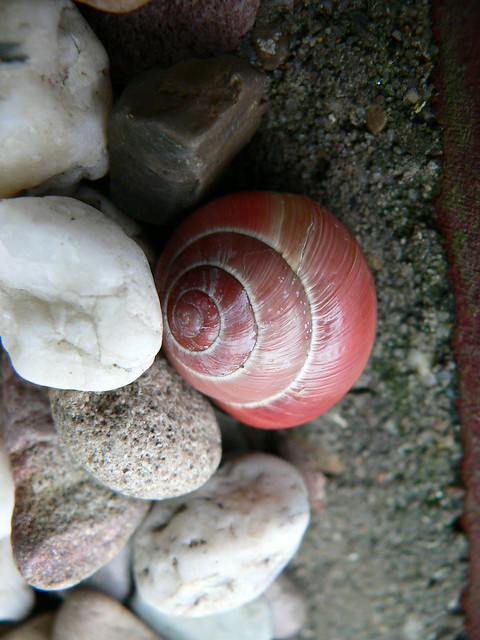
pink snail by °Dirk. (Creative Commons licence.)


(This post is a synthesis and update of my two previous posts on slow design on the ecoDomestica reDesign blog. Every blog needs a keystone post or manifesto; this is that post for Sustainable Slow Stylish.)


Slow Design is a philosophical cousin of several movements with similar goals: slow food, slow fashion, Platform 21's Repair Manifesto, relearning traditional skillstransition initiativesvoluntary simplicity, and the Zen Buddhist concept of wabi-sabi. Some bloggers have misconstrued the principles behind all these movements as being simply a variant of the old Alexander Keith's India Pale Ale slogan, "Slowly, Carefully, Taking The Time To Get It Right." Others seem to think keeping it local is the key to being Slow. Those are good starting points, but I think the principles of the slow movement go much deeper, right to the core of our behaviour as consumers. As they become more widely adopted, they'll have the potential to be truly world-changing. 


The published Slow Design Principles (Strauss and Fuad-Luke, see www.slowlab.net) are couched in academic language, and the case studies cited mostly involve the design of objects or artistic installations. However, the principles and practices of Slow Design are tools that are useful to sustainable designers, decorators, and artisans of all disciplines. To summarize (and loosely quote) that document's main points:
Slow Design:
  • facilitates 'slowness' and provides a balance to the industrial-consumerist model of design.
  • seeks to shift the user's awareness and attitudes about materials, processes, time, and natural environment.
  • reveals experiences and materials that are often missed or forgotten.
  • strives for truthful, exposed use of materials and process (so the hand of the maker is visible).
  • facilitates creative interaction between the user and the object or its location.
  • makes users think about where the object came from, inducing contemplation & 'reflective consumption'.
  • allows the object to change, grow, or alter over time to reflect its history and usage, and continue to be used; and reflects its history prior to its current usage.
  • comes from open-source, collaborative, transparent, and evolving processes.
  • focuses on localness and community, through collaborations and co-design with the local community and local artisans, mapping and using local knowledge, reflecting local values & visual vernacular, and using affordable local materials, to give the finished design an authentic sense of place.
  • celebrates diversity and pluralism by engaging a large range of stakeholders in the planning process. (For example, the charette process used in LEED building projects.)
  • recognizes the urgent need for stewardship of the natural environment and resources, as well as honoring local knowledge and traditions, and encouraging engagement with place.
So, slow design is thoughtfully conceived, thought-provoking, flexible in use, collaborative, personalized, timeless, and sustainable. Slow design is not anti-industrial, per se, but it asks its users to think of themselves as codesigners or participants, instead of as passive consumers. Process is also important in slow design, and can involve creating open-source data and holding do-it-yourself workshops in order to foster collaboration, build skills, and stimulate conversations around local issues. Slow design is, at its heart, about making holistic choices that support communities and their traditions and skills. 


Furthermore, the frugality and do-it-yourself aspects of slow design really lend themselves to our changed economy. The Shelton Group's green marketing blog has noted this shift and suggested that marketers are going to need to pay attention to it, instead of just appealing to 'a more aspirational way of life' in order to sell products.

This list illustrates what these ideas mean in everyday life:

Slow Design is:                                                  Slow Design isn't:
authentic                                                           mannered, artificial, phoney
heirloom-quality                                                 semi-disposable
refurbished Victorian homes                                 NeoVictorian subdivisions
modern (while respecting the past)                      like living in a museum exhibit
gardens                                                             outdoor living rooms
rain barrels & watering cans                                automatic irrigation systems
clotheslines                                                        tumble dryers
timeless                                                             trend-driven
cedar shakes                                                       vinyl siding
handmade                                                          machine-made
reupholstering & refinishing                                  buying new
Etsy                                                                   Ikea
personalized and creative                                     impersonal and off-the-shelf
local                                                                   imported
reduce, reuse, recycle                                          buy, buy, buy
limited-edition or one-off                                     mass-produced
renewable                                                           fossil fueled
high quality                                                         brand-name-driven 'luxury'
thought-provoking                                                thoughtless
walkable, bikeable neighborhoods                         car-centric gated 'communities'
built for the ages                                                 planned obsolescence
...So, what do the principles of slow design mean to you?