Showing posts with label slow news summary. Show all posts

Wednesday, November 13, 2013

Fall 2013 Slow News Summary

I'm back to regular life, and gradually catching up on all the writing I've been putting off! I'd like to thank my friends and followers who stuck by me through my foray into covering the municipal election for the Local Good, which we did on the principle that engagement with local politics is consistent with locavorism. I know my twitter and Facebook feeds were pretty #yegvote-heavy from August through October, and I'm sure anyone not in Edmonton who is still following me was muting the hashtag by the end. Here's a summary of what I learned in the process. It was pretty interesting, but I'm delighted to be taking my other interests off the back burner. Speaking of...

On sustainability and environment:

Let's start with the bad news. Arctic sea ice is not recovering. Ice on Arctic islands is melting for the first time in 44000 yearsOver 80% of terrestrial ecosystems are at risk from climate change, and ocean acidification likely means all ocean ecosystems are also at risk - and many marine species are already under intolerable pressure from overfishing and plastic pollution. The global food supply is also at risk from climate change, and National Geographic's interactive sea rise map demonstates that unless we can turn things around, many of the world's coastal cities will eventually end up underwater. The most recent IPCC report (even with revisions) is very clear that climate change is anthropogenic and only drastic cuts in greenhouse gas emissions can prevent unprecedented consequences. The somber tone and stark language being used by scientists trained to speak conservatively with lots of caveats is striking; it brings to mind cold-war-era language around the possibility of triggering a nuclear winter.

So, we have an enormous challenge ahead of us, an enormous responsibility to bear - and an enormous opportunity. The solutions we create as we build our cities and live our lives and move toward a zero-carbon-emissions future will need to be innovative and exciting. Let's do this thing.


An augmented-reality sundial bench by Joshua Barnes, shown at London Design Festival 2013, via designboom. An app allows users to record memories associated with the shadow cast by the dial.
On slow design, slow making, and slow home:

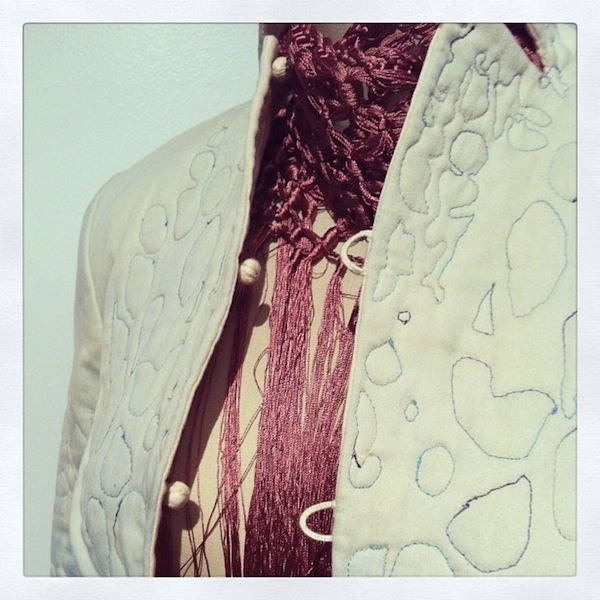
Balmaseda ‘Tafoni jacket’ at the ‘Art of Slow Fashion’ event in New York (photo by Abigail Doan, from her wonderful LOST IN FIBER Tumblr)
On slow fashion:
On slow food:
On slow travel:
On slow living, slow parenting, slow money, and so forth:


Saturday, July 20, 2013

Slow News Summary: the summery edition

There's so much great stuff to share from the past couple of months! Let's get right to it:

On slow design, slow making, and slow home:
On slow fashion:
I love this idea, via Nutfield Genealogy: an old family recipe, woodburned as it appears on the original recipe card, into a cutting board. 

On slow food:
On slow travel:
On slow living, slow parenting, slow money, and so forth:
  • In praise of slow tech - as in older technologies that force us to slow down, think harder, and focus our creative energy.
  • Another take on slow tech: high tech, but human-centred, following the slow food tenets of "good, clean, and fair". What an interesting alternative to the low-tech/handmade version of slow tech!
  • Scott Laningham on The Slow Fix, with an interview with Carl Honore
  • A review (en francais) of the gorgeous-looking SLO magazine.
  • Diane MacDonald on Slow Consulting.
  • Australia's Storyology talk slow journalism.
  • American friends, check out Slow Flowers to find florists who design using US-grown blooms. (Here's hoping they expand their reach to the rest of North America.) It's from Debra Prinzing, who literally wrote the book on local bouquets.
On sustainability and environment:

Sunday, February 24, 2013

Slow News Summary: Mid-Winter Edition

Pssst: Keep it on the down-low, but I hope to have some exciting news to share soon about a slow design event that I'm planning. Meanwhile, check out all the slow goodness that's been popping up on the intertubes:

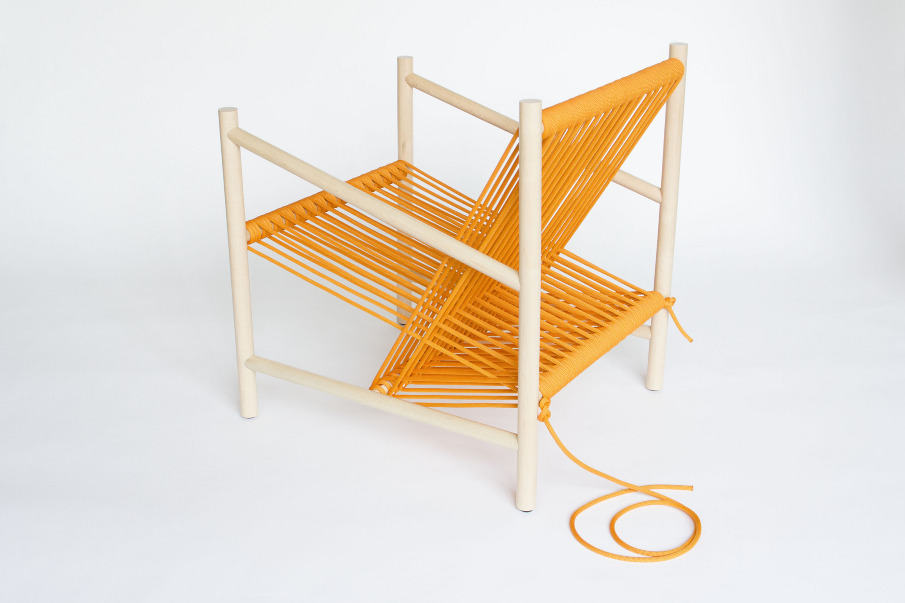
Calgarian Laura Cardwardine's brilliant Loom Chair was shown at the Prototype exhibit at IDS13 in Toronto last month. Via her page on Cargo Collective - follow the link to see a slideshow of how she designed & created it. 
On Slow Design, Slow Making, and Slow Home: 
On Slow Fashion:


Slow Fashion Forward have posted a wonderful set of simple guidelines to help consumers make more sustainable fashion choices.

On Slow Travel:
On Slow Food:
On Slow Living, Slow Parenting, and Slow Work:
On Sustainability and Environment:

Must reads from the past couple of months: The Atlantic on how food and climate are connected; Mother Jones on the enormous challenge of preventing polar bear extinction; and The Guardian on domestic spying at the behest of the conservative Canadian government on citizens who disagree with their environmental policies. 

Sunday, October 7, 2012

Slow News Summary: Autumn 2012

Happy (Canadian) Thanksgiving!

I'm switching to a seasonal schedule for the slow news summaries, to give me more time for other projects. If you'd like more frequent updates, you might want to check out the Slow Weekly on paper.li - although it's difficult to set that up so that it catches all the relevant news without having a lot of peripheral material.

These might be my favourite slow design seen in photos from London Design Festival: orphaned drawers in new chests of salvaged plywood by Rupert Blanchard (via Inhabitat), which were shown in his studio space in the Shoreditch Design Triangle. He also has photos of fascinating furniture made from a patchwork of damaged wooden packaging crates on his blog.

On Slow Design, Slow Home, and Eco-Products:
  • LifeEdited drew our attention to Saul Griffith's "Heirloom Design" philosophy, whose principles are interchangeable with slow design (except perhaps in that locavorism isn't an explicit requirement, although sustainability is).
  • My new favourite blog Slow It Down explored the fleeting pleasures of street art with examples of the scenes in Bristol, England and Melbourne, Australia. (Locally it is chronicled on the Foundmonton tumblr. I've found a few pieces of graffiti near my home on a stretch of abandoned road, but the bored teenagers tagging crumbling asphalt in my suburban neighborhood need to seriously up their game if they ever want to be considered street artists.)
  • Treehugger put together a great, up-to-date explanation of how to lower your home's carbon footprint without breaking the bank.
  • Laura from Simple Design wrote about the interior decor trends she's still not over - several of which I'd argue have achieved classic status. (Me? I'll never be over ikat.)
  • LifeEdited shared the story of McMansions being used as an intentional communities, artists' colonies, and cohousing space - and mused about how sprawling Victorian homes turned into apartments during the Great Depression are a model for the repurposing and right-sizing of huge modern homes.
  • An indoor hydroponic system that's an Ikea hack? I remember when the only people who talked hydroponics were, ahem, weed enthusiasts. This is a different sort of beast, coming from a fusion of permaculture and slow design principles, with one of the stated goals being to allow consumers to themselves become makers and designers.
  • Assemble Papers explored the slow-design ethos of furniture designer Daniel Barbera.
  • The London Design Festival showcased lots of sustainable and flat-pack design this year, but what interested me most were the handmade pieces and the ones designed using slow principles. I've already shown you Rupert Blanchard's work above. Chile's Bravo! showed their beautiful furniture at Tent London, made of copper and native wood species using "rescued local carpentry traditions". Roland Hunt showed stools made of recycled paper and hand-carved resin-coated logs at Designersblock. Naomi Paul showed her gorgeous hand-crocheted Omi Pendant lamps (the photos of the 'Gluck' shape make me weak-kneed). Breaded Escalope showed their Love Me Bender project, which turns creating steam-bent additions to broken mass-market chairs into performance art. English designers also played with the Anglepoise lamp form: Degross Design & Innovation created one from a discarded amber glass jug, while Jason Lloyd Fletcher used salvaged furniture parts for the lamp that was part of his Third Generation Furniture collection (I'm also loving his Genevieve chair woven from upcycled leather belts, which is so much better-executed than 99% of the belt-recycling projects I've noticed on Pinterest).
Jason Lloyd Fletcher's Genevieve chair and stool with marble top. Beautiful work! 
On Slow Fashion:

I'm coveting State's reconstructed smocks. Found via I Am The Lab.

On Slow Food:
  • Here in Edmonton, the draft Food and Agriculture strategy has been released, with only an 8-day comment period (to comment online go here before Monday!) which promises to be followed by a raucous public meeting fuelled in part by a war of words between opposing groups and the emerging public interest in food security and urban agriculture. Those in the know are complaining about how rushed the process has been (possibly as a result of behind-the-scenes pressure from developers), how generic and watered-down the resulting 'toolkit' feels, and how little of the comments provided at various points by local experts have actually been incorporated. Those local experts who were part of the consultation process are not allowed to discuss it publicly. Certainly the report looks to me like very much like what was presented at the Food & Ag conference at the start of summer, which leaves the impression that the consultants were not really listening to the feedback from attendees. (I'll understand if those of you not in Edmonton want to mute my twitter feed until after October 26th - I'll also be doing a lot of retweeting in my role with The Local Good).
  • I'm also a bit obsessed right now with the idea of public urban orchard projects like the ones in London, Chicago, and even Calgary (I wonder how Ralph Klein would have felt about his name being attached to an urban agriculture project?).
  • Also upcoming in Edmonton: Food Secure Canada's annual conference.
  • Slow Money in Canada: http://ca.finance.yahoo.com/blogs/insight/slow-money-movement-spreads-north-canada-160857764.html


It's canning season, and Treehugger shared some brilliant vintage posters promoting food preservation. This one is part of the Preserve series by illustrator Carter Housh, which also included images of Uncle Sam rolling up his sleeves in the kitchen.

On Slow Travel:
On Sustainability: 

George Lakey penned a thought-provoking post for Yes! Magazine on why consumer choices aren't enough to address the bigger issue of climate change, which makes a slightly uncomfortable read about how the sociology of different socioeconomic groups are being wielded by the wealthy and the petroleum industry to maintain the status quo. Read in combination with this post about design thinking (which I found via Treehugger), it'll make you think hard about the narratives behind products, and how best to make a better world. 

On Slow Living and Slow Work:
  • My brilliant twitter friend Stacey has a little permaculture side project going on, that started with a passion for plants, a few fallen trees from a hurricane, and a willingness to dive in and learn on the fly. I've been thinking a lot about that approach to creativity lately - which this post calls "the creative power of the outsider" - maybe because as an over-educated ex-scientist I have an outsider's approach to the worlds of design and fine craft. Or maybe because I share Stacey's impulse to jump in with both feet and immerse myself in a subject. Or maybe both. Of course it has its drawbacks, like a steeper learning curve or not doing things in the most efficient way. However, the reward can be enormous. The most interesting work in any field emerges at the intersections between disciplines, where people with differing perspectives collaborate.
  • The case for spending more on less.
  • Why schools should help students find their passion.
  • A back-to-school kids' clothes and books swap held at a local school? What a lovely idea.
  • Turn off your smart phone and live in the moment.
  • London's RSA hosted a panel discussion on October 4th entitled The Slow Revolution - click through to the link to download an audio file.
  • Shareable on why sharing on a neighborhood scale is a tough sell, and how using tribes as the basis for sharing communities could sidestep those issues.
  • GOOD explained bokashi composting and gave some tips I've not seen before. That reminds me, I need to figure out where my bokashi setup got packed when we moved (oops).
  • I kind of love what New Dawn Traders are doing. Check out the Guardian's explanation from February of their inaugural slow-food-by-slow-cargo voyage, then go browse their blog. Their goals also include supporting and revitalizing the traditional skillsets of the age of sail, and treating each port-of-call as a pop-up opportunity to promote the ideas of the slow movement. How can anyone not want to run away to sea with them?
  • Stop overscheduling yourself and your children.
  • Brooke from Slow Your Home (who is writing a novel *and* an e-book! Go Brooke!) suggested trying single-tasking instead of multitasking, wrote about finding your passion through experimentation, and made a wonderful list of 21 quick ways to simplify that makes a brilliant supplement to her bootcamp posts.
  • Here's a book on slow democracy. What will we attach that adjective to next?
  • Shedworking drew our attention to a brilliant article on how the London Olympics have catalyzed a conversation about presenteeism versus working from home. Meanwhile Treehugger reported on a trade-show talk exploring the future of workspace design, which is leaning toward the creation of flexible team-use or co-working spaces given trends in technology, homeworking, and employees who need to be present at their clients' offices instead of their own.
  • Is it practical to switch back to not answering emails during our off hours?
  • David McCann wrote the terrific "Work Slower, Produce More?" about results-only work environments from a managerial perspective for CFO. The comments largely miss the point, which brings home to me that a lot of organizations are not remotely ready for the way disruptive technologies will change the nature of office work.

Thursday, August 16, 2012

Slow News Summary: Summer Edition

I'm back from my holidays!

While I was away, I had a fascinating conversation with an old friend who isn't familiar with the slow movement. She is unconvinced that it isn't just another hippy new-age guilt-trip. She's unwilling to really listen when its ideas are described, because she has preconceptions that it's about depriving yourself (it doesn't help that her first exposure to it was one of my posts about fashion diets, and that I have yet to refine my elevator pitch about what I am doing, sigh.). But she made an excellent point, that part of her gut reaction to the slow movement is its' name (which originally was chosen in another language): she asked, "Who wants to be called slow?" Huh. Something to think about.


To create the Gradient Mashirabiya table, Mischer'traxler collaborated with a Lebanese carpenter using techniques traditionally used to make decorative architectural window screens. Via Inhabitat.

You can see Toronto's Castor Design's work in this photo via Remodelista of their restaurant, Parts & Labour: limestone Castor stools inspired by beaver-chewed tree stumps, a giant light fixture created by plastering and applying gold leaf to a satellite dish, and Tank Pendants created from empty fire extinguishers.

On Slow Design, Slow Home, and Eco-Products:


The Sea Chair Project proposes converting retired fishing trawlers into platforms for collecting plastic pollution from the ocean (thus helping to restore marine ecosystems) and using simple molds to create furniture onboard. The designers created this prototype stool using a sluice-like device (dubbed the Nurdler) to collect plastic washed up on a beach; a hydraulic press was used to create briquettes from organic material collected, which was then used as biofuel for the molding process. Admittedly it looks a bit rough, but it definitely follows the slow design principle of the material's prior life shining through and informing the user's reaction to the object (and in this case, the plastic pollution concentrated in maritime gyres worldwide). The designers suggest that small 'floating factories' on converted boats could employ fishermen who would otherwise be without work due to depleted fish stocks. I think there are technical challenges to overcome - such as the difficulty of harvesting plastic that has broken down into microscopic particles in the parts of gyres where 'plastic soup' has been found, or harvesting plastic without harvesting living creatures - but this is a thoughtfully conceived bit of slow design. Via Treehugger.

On Slow Food:


On Slow Fashion:


I'm a little obsessed right now with these lovely summery dresses sewn from vintage bed linens by Etsy's Naughty Shorts (designer Rebecca Williams from Australia). Via the Naughty Shorts blog.

On Slow Travel:

  • From BootsNAll, Travel Is Not A Contest, a list of reasons to embrace slow travel. I love the wonderful reminder about, "going deep instead of wide."
  • Tsh from SimpleMom has great tips for travelling internationally with kids.
  • Margaret from SlowMama wrote about how a little planning improves a slow vacation.
  • FamilyOnBikes hosted a guest post on slow travel with children by Molly from South America Living.
  • From EcoSalon, lists of ways travel can improve your love life (ooh la la!) and strategies for long-term travel on a budget (mostly working-while-travelling).
  • Two bits I missed from The Art of Slow Travel: they had a wonderful guest post by Sarah Shaw on slow travel in Cucso, Peru with tips that apply to anywhere you're aiming to spend time, and shared a brilliant post from The Road Forks on working as a digital nomad. Aaand added to the blogroll, thanks Denise!
  • Martin from The Winding Way took a delightful slow campervan trip to France from the UK, and fretted about having to do 200 miles of the trip on a freeway then taking time at their destination, instead of going by slower roads en route. This really brought home to me the importance of geographical context when we talk about slow travel - to me, living in the vastness of Canada, 200 miles on a highway sounds like a relaxing daytrip, and having to spend a day in airports to get to most travel destinations (even in my own country) is a given. So, for me, by necessity 'slow travel' applies to how I approach my time at my destination, not how I get there. In contrast, for those living in Europe, slow travel is often equated with train trips, bicycle trips, and walking (hiking) trips - which for me, would be part of my activities at my destination - and some writers get a bit dogmatic about that definition. 

On Sustainability and Environment:


On Slow Living: