Showing posts with label trends. Show all posts

Friday, December 9, 2011

Using Trend Colours in a Slow Home

By now, if you're in the design, decor, or fashion biz, or you follow anyone who is, you'll have heard about the other day's announcement that Pantone's Color of The Year for 2012 is Tangerine Tango. You know, that colour we called burnt orange in the seventies, and fashionistas call Hermes orange? We'll be seeing a lot of it for the next few months.

(Here's why it's called Hermes orange, from eBay via Pinterest.)

You may think there's no place for a trend colour like red-orange in a Slow Home, particularly a colour that psychologists tell us is associated with cheap goods, and that a third of women say is their least favourite colour (source). However, orange is also cheerful, energetic, and youthful, and this tone has a nostalgic midcentury-and-seventies feeling. It's surprisingly versatile as an accent colour.  

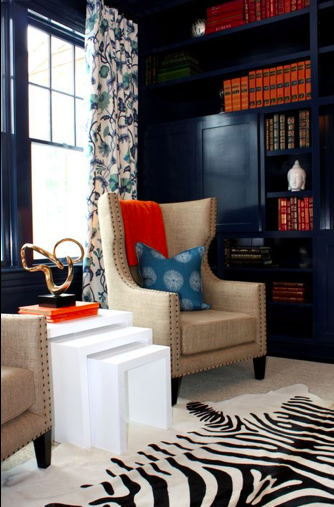
As the complementary colour of blue, a touch of it has the ability to make a navy blue or turquoise room sing.

Library for a home in South Hampton by Porter Design Company,
via Effortless Style. I'm dying to do a navy blue room.
From Architectural Digest's June 2011 issue, via Live Like You.
With greens and yellows it reads as fresh and summery.

Christmas citrus via Tobi Fairley
With reds and pinks it's a bit bohemian and exotic.

suzani chair at Black & Spiro, Brisbane, Australia
via Absolutely Beautiful Things
With grey or geige walls, it brings much-needed warmth.

via Black and White {Side by Side} - okay, this is yellow orange, but you get the idea
In a neutral room with lots of wood (which is categorized as orange on the colour wheel), 
it brings out the wood's beautiful grain.

Kitchen by bright designlab via Design*Sponge. Mmmm, walnut and marble.
As I said before in my post On Trends and Slowness, it's human, even desirable, to crave novelty and want to bring trends into our homes and wardrobes to keep them from feeling stale. A slow home ought to feel timeless, but not stuck in a time warp. The trick is to incorporate trends (like the vibrant colours of the last five years) without treating our stuff as disposable. Luckily, trend colours run on a (roughly) thirty-year cycle. Using a handful of carefully-chosen, locally-made, handmade, sustainable, or vintage pieces that can be swapped out or repainted is an ideal way bring our homes into the present.

Penguin paperbacks via My Villa Life
So, give Tangerine Tango a whirl with a pile of old Penguin paperbacks or a bowl of Mandarin oranges. If you love how it looks with the things you already have, you can easily bring in a bigger hit of it with a great vintage fiberglass shell chair or new textiles. If you hate it, consider using the same strategy to bring one of the other current trend colours into your slow home!

Wednesday, September 28, 2011

Pinteresting

I suppose it was inevitable - like many others in the blogging world, I have become a bit obsessed with Pinterest. (I blame Zoe from SlowMama for introducing me to it.) Who knew that collecting bookmarks could be so sticky and addictive? Part of the appeal is that it's so visual - it really is a digital inspiration board - and part of it is the ability to file things by category. Seeing what your friends are reading is always pretty nifty, but you can also browse through the feed of everything being pinned - handy if you like to trend-spot. It can also be a form of self-exploration to create a pinboard full of random things that inspire you, then look for themes among them.

For instance, I've found that I have an incredible soft-spot for cottagey whitewashed timber walls, nautical decor, and floor-to-ceiling gallery walls.


Of course I've also created some great pinboards on aspects of the slow movement, and a Slow Home inspiration board.


There are some downsides to plugging in to the hive-mind on sites like Pinterest, though. It's easy to spend too much time on it, and ABC Dragoo has written previously about how easily bloggers can lose their unique voice if they do a lot of reblogging - and the same is true with your visual input in many other fields. If you are a creative, you'll reach a point where you need to disconnect from all the other great work happening out there in the wide world in order to make things that are original and unique.

However. I think if you use it with awareness, manage your time a bit, and install a 'pin this' button on your browser so you can bookmark the inspirational stuff you find on the rest of the Internet and keep your boards fresh, it can be a really useful site. As an exercise to prove this, I created a pinboard for coolness emerging from the many tweets and blog posts from the London Design Festival this week - mostly things that weren't yet on Pinterest (or at least not easily findable with their keyword search). It will be interesting to see whether anyone else finds that pinboard useful (I guess I'd measure that by looking at the number of repins). It has already helped me to focus on what is new in design and inspired me to push myself in my own work.


I'd also suggest that if you blog about topics that are of interest to Pinterest users, you should look at your sites stats. You may be delighted to see (as I was) that a couple of your older blog posts are getting more visits than usual, thanks to a reader pinning them. It'll be interesting to see if Pinterest use becomes part of the standard advice on website promotion in the not-too-distant future.

As it happens, Pinterest also just launched their new look today. I was going to show you a couple of before-and-after-the-redesign screenshots, but I didn't get anything screencapped in time (whoops). You'll just have to take my word for it that it looks a bit cleaner and prettier now.


Follow Me on Pinterest

Thursday, February 24, 2011

On Trends and Slowness

Jenny at Little Green Notebook has started a compelling discussion on her blog, about how being a design blogger (or a devoted blog reader) makes one hypersensitive to whether an interior design trend is 'over' before it has even hit the mainstream:
http://littlegreennotebook.blogspot.com/2011/02/are-we-overexposed-to-design.html

I had so many thoughts on this that I couldn't summarize them in a pithy tweet or one-paragraph comment.

When you blog daily about a topic, you put yourself under pressure to create original content (or original images), and you become a trendhunter, whether you mean to or not. There is nothing wrong with being on the cutting edge of knowledge in a field. There is nothing wrong with being aware of your average readers' (or clients', or audience's, or friends') level of literacy and expectations about a topic. However, you should never let that awareness alter your writing (or decorating, or fashion sense) so that what you produce isn't an authentic reflection of who you are. Your best work will always be a showcase for your personality, your artistic voice, and your expertise.

Of course that is much easier said than done. Most of us are still finding our voices, aren't we? That's part of why we blog, or keep journals and sketchbooks and portfolios of our student projects. And it can mean we're unduly influenced by trends.

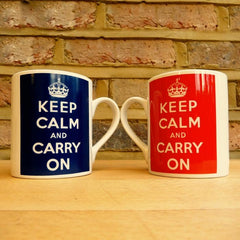
For me, part of finding my authentic voice and design vision is exploring the slow movement. It can be really tricky to incorporate the principles of the slow movement into the parts of your life that tend to be trend-driven. The worlds of fashion and decor are ruled by novelty, consumerism, and marketing; if they weren't, we wouldn't give a sweet damn what colours the industry experts have forecast, or whether our shoes have round or pointy toes. Furthermore, marketers are speaking to our deepest desires when they craft their messages for consumers. Our clothes are a marker for the tribe we belong to, or the tribe we want to belong to; we don't just buy fabric to cover our bodies, we buy our identities and our aspirations (Kristy at One Dress Protest has recently done a genius post about the blurry line between fashion and tribal uniform.). We tell ourselves a story about the life we wish we lived, and we shop for housing and furniture accordingly. We aspire to be slim and healthy, and we buy exercise equipment that gets used mostly as a clothing rack. We want to appear worldly, so we buy a ceramic replica Buddha statue and put it on the fireplace mantle or in a garden bed. We want to appear well-read, so we buy classic literature and glossy art history books and display them prominently on our shelves and coffee tables. We want to be stoic and cheerful about the Current Economic Uncertainty so we buy posters and coffee mugs emblazoned with World War Two propaganda.

Source. Yeah, I own one too.

Don't get me wrong: this is no anti-consumerist rant. There's nothing wrong with expressing ourselves and manifesting our desires through our purchases, or with craving novelty, provided that we do so in moderation. Those are universal impulses. However, these realities can make choosing or blogging about slow fashion or slow decor a delicate balancing act. How do you keep your home and wardrobe current enough to keep them from feeling stale, without treating their contents as disposable? How do you present interesting new trends without becoming a pawn in a corporate marketing strategy, or broadcasting aspirations that conflict with the whole point of the slow movement?

The slow movement isn't about the self-deprivation of buying nothing; it's about becoming a mindful consumer. It can mean being more self-aware and thinking hard about why you want to buy an item and whether you'll really use it. It can mean buying fewer, higher-quality items (and the different sort of abundance that brings into your life); buying locally-made and sustainable items; buying handmade or custom-made; choosing timeless or durable styles; or buying vintage or antique (Hopefully more than one of these criteria will fit your purchase!). It might mean choosing easy-to-live-with neutrals for your home and wardrobe, and bringing in trends through thoughtfully-chosen accessories - or it might mean fearlessly embracing your signature style and your favorite colours, and only buying what you truly love.

(I'll be posting specifically about applying those ideas to my wardrobe in the coming week.)

So, back to those overexposed trends in blog-land... As I've already confessed, I have a Keep Calm knockoff coffee mug. Yup. That poster design has become ridiculously ubiquitous, but my grandparents met in London during The Blitz - and my Dad was born there. For me, it has a special resonance, and it doesn't matter that it's So Over. I bought it because I love it and it's meaningful.

So for me, a Keep Calm mug is the perfect object to represent both overdone trends and slow design principles. What trend that's So Over has become a cherished object in your life?