Showing posts with label suburbs. Show all posts

Wednesday, July 18, 2012

The Suburban Slow Home Case Study

Exactly a year ago tomorrow, I wrote a long post about living slowly and sustainably in the suburbs that I'd like to revisit. (Go reread it and meet me back here, mmmkay?)

The approximate floorplan of our new home, not to scale.
As I've been showing friends our new home, I've noticed that I'm a bit embarrassed by it. It's bigger than I feel like we need. It's one street over from million-dollar mansions with ravine access, whose property values we might be lowering by parking our dinged-up 12-year-old Toyota in our driveway. The master bedroom and ensuite all by themselves have more square footage than my first apartment. Almost every surface finish is some variant of builder beige.

So far, not so slow, right? But that's actually part of the plan. We wanted a house with great bones, good solar orientation, and a big enough lot for a large garden, in or near the new-urbanist neighborhood where we were already living, where we can live for the next couple of decades. We got all of those things with this house, plus a great location that's well-connected to recreational walking paths and the bike trail network, and good proximity to amenities (a yoga studio two blocks away! close enough to school and groceries that we can theoretically live car-light!). Unfortunately, there aren't many houses available in our neighborhood that meet our criteria, so we compromised on getting a bigger house than we were looking for in order to get a bigger yard; our other choice to get a bigger yard involved moving neighborhoods and living through a stressful renovation of an older home. Our new home will be a case study in gradually customizing a fairly typical builder-basic suburban move-up house to make it a slow home. I hope documenting it here will be helpful, given that about half of North Americans live in suburbs. All those houses and the infrastructure that serves them are already built, so discussing ways to slow them down and make them more sustainable is worthwhile. You'll be able to follow our progress on this blog using the tag 'slow home case study'.


Here's our to-do list, in no particular order:


- When we took possession, we did a little painting and moved in, then held off unpacking all the boxes while we worked on repainting and staging our old house for sale (watch for a post about that soon!).

- Now that our old house has sold, we will move our remaining furniture, then gradually invest in a mix of antique and new furniture to fill the obvious gaps in the new house. Right now I know those gaps include a sofa bed for the 'bonus room' to allow family movie nights and accommodate visitors, and book storage to replace the built-ins we left behind.

- The next step in personalizing our home will be to add architectural moldings, paint walls, hang artwork and family photos, and unpack the rest of our things (and purging more things we don't need or use as we unpack).

- Obviously, since this is a slow home makeover, I'll be looking to incorporate ideas from Slow Home Studio's courses and Slow Your Home's bootcamp as I fine-tune our floorplan and work out what else we need to do. I'll also be following my own advice and bringing local materials, the work of local artisans, a sense of place, and a timeless design aesthetic to the decorating scheme.

- A big goal for this summer is to get the kitchen organized for efficiency, to allow home baking and canning to happen, and make it easy for us to make more of our own food from scratch. (My daughter has asked me to start teaching her how to cook. I am so excited about this! Especially since the disruption of moving is the perfect time to incorporate healthier eating and exercise habits into our daily lives, and switching from processed to homemade will help us accomplish that. Slow food FTW!) We also will consider adding cold cellar storage and/or extra pantry space in the basement. 

- We also need to get the garden in the back yard properly set up with a play area for the kids, raised beds for planting veg next year (so the dog doesn't play on top of the seedlings, like she's prone to doing now), and the perennials (divided from the mature garden at the old house) and fruit trees (including a seedling Evans Cherry transplanted from the old garden) planted; this will include removal of a fungus-infected hawthorne tree and replacement with another fruit tree. Oh, and we should arrange outdoor furniture on the back deck for eating al fresco and entertaining, and add a shade structure since it's currently only useable in the evening. Someday I'd like to have hens, too, but since (a) they're not legal in my city yet and (b) sharing a yard with our bird-dog might be stressful for them, that will have to wait.

- Meanwhile in the front yard, the door and porch need paint, and we need a pair of chairs and the existing minimal landscaping (and dead tree) replanted to make the front of our home more inviting. Right away, we will set up a bin or two of outdoor toys and bubbles and chalk so our children play with other neighborhood kids on the sidewalk, and I'd eventually like the sod pulled up and the area relandscaped as a Japanese garden with a small kid-friendly bamboo fountain, some boulders the kids can play around, and a stepping-stone path through the plantings - so it would double as a decorative space and a place neighbors would actually enjoy hanging out and building community. I need to think about whether the front garden would be xeriscaped with a high proportion of native plants, or whether my concerns about urban food security will mean I choose edible landscaping - both approaches have merit. I also need to consider the neighborhood rules with respect to landscaping (which are mostly written to prevent people from creating no-maintenance gravel 'gardens', W00T).

- Bikes are already taking over the garage, so we need to get a compact bicycle storage arrangement in place. My youngest won't tolerate riding in a rear seat instead of pedaling for much longer, so we also need a bicycle setup that allows easy bike rides for me and the kids to school and grocery stores to minimize our car use (although the kids can also take the yellow bus starting in autumn). I already have a pretty sweet vintage 3-speed roadster with front and rear baskets that I use for shopping trips.

- Obviously we will also want to do an energy audit (probably through new local nonprofit eco-retrofit specialists C Returns) and start making improvements to our home's energy and water efficiency - this process will definitely get a separate post or five. The house already is relatively efficient, being only four years old, so I predict that the energy audit will suggest a lot of little things that can add up to make a difference, like repairing gaps in insulation and adding caulk. Our budget won't allow us to strive for net zero any time soon, but I also think replacement toilets (TOTO dual-flush) and a solar installation (possibly via Enmax's new Generate Choice program) will be happening at some point, and I'd love to install a sun tunnel into the windowless laundry room.


- An easy and obvious green project will be to set up an air drying area in the laundry room, and install an unobtrusive (retractable?) clothesline in the back yard.

- To add character and useful features to the house, we'd like to add built-in bookshelves and window seats, and add trim to make the interior architecture more authentic to the period it's attempting to reproduce. I suspect that the Not So Big House book series will be consulted alongside the Arts-and-Crafts/Craftsman/Mission/Prairie reference images for ideas.

- A practical way I can make a difference will be to make a point of riding my bike to shop at neighborhood businesses (especially the mom-and-pops) and the local farmers' market, and requesting bicycle parking where racks haven't been installed yet by developers. Both the Mary Poppins Effect of seeing a mom running errands in street clothes on an upright bike and the presence of more bike racks should encourage other people to use their bicycles (and I can vouch that there are plenty of families riding for fun and errands in the more mature New Urbanist neighborhood next door where our old house is).

- We are aiming to do nightly rides and walks with my family to explore all the local paths, to increase our familiarity with the neighborhood and get more exercise - and, when we are in the ravine proper, to get the kids exploring nature and seeing the animals and birds that live down there. My husband is actually using the GPS features of his phone to map all the unmarked trails through the sanctuary while he is walking our dog, which he then plans to annotate and add photos to before making it public on GoogleMaps. I'll let you know when that project is posted.

- We will also eventually finish the basement to make the house useable as a multigenerational family home, so that the square footage per person ratio becomes more appropriate. For now it will just stay unfinished playroom and crafting space, but there is room for another large bedroom, living area, and plumbing roughed-in for a bathroom, so adding a kitchenette to make it an in-law suite would be a relatively simple proposition. If we will be doing this, we'll need to also apply aging-in-place criteria to our design decisions throughout the house, such as ensuring that doors and hallways are wide enough, lighting is bright enough, flooring has enough cushion (cork?), and larger rooms have enough soft furnishings to prevent echoes (although we can't do much about the multi-level floor plan).

- Setting up the room closest to the front entry as a studio and home office appropriate for client meetings will facilitate both a home-based business and a telecommuting work arrangement - and will be crucial for supporting my goals of finishing rewriting my business plan and relaunching my career once both the kids are in school full-time.

- Since the choices made for a slow home should last forever, we will also need to keep the likely long-term effects of global economic crises, disruptive technologies, and climate change in mind as we make each decision - and we will need to do all this frugally (so we can pay down our debts as quickly as possible). This will involve a lot of time, research, creativity, and willingness to make things ourselves.

Any other ideas for things I should add to our to-do list for the Suburban Slow Home case study?

Tuesday, July 19, 2011

Slow In The Suburbs?

When we talk about the challenges that we face in a future of fossil fuel scarcity and climate change, different solutions appeal to different people.


Some people react to these ideas by going back to the land and building their off-grid self-sufficient-ish dream home on a rural acreage or hobby farm; a few go even farther in the direction of survivalism. It's an attractive strategy, and it's likely that we'll need to revive local rural economies and increase the number of small farms serving local customers if food insecurity is a consequence of shorter supply chains, particularly for perishable items, in an overpopulated post-peak-oil world.

However, rural life is not for everyone, and withdrawing from city life would mean not being part of an exciting period of urban adaptation, during a time when the whole planet is becoming increasingly urbanized. It's reasonable to expect that innovation in urban planning and changes in the way we live in our cities will make the biggest difference to the quality of life of most people, and the biggest changes to our collective carbon footprint. In many developing countries, slums and shantytowns of refugees and economic migrants into cities will provide the greatest challenges - but in North America, where our relative affluence and already-urbanized population will blunt those effects, the sprawling suburbs of most of our cities will need to be transformed. A huge percentage of people in North America live in suburban single-family homes. By 2000, census figures showed 50% of Americans lived in suburbs - and by 2004 The Nation was noting that there were almost as many suburbanites as core-dwellers living in poverty, and skewering the stereotype of suburbs as rich white enclaves. The numbers are fairly similar for Canada, with about half of residents of metropolitan regions living in low-density neighborhoods according to a 2008 analysis. We also know that our buildings are responsible for 35% of North American carbon dioxide emissions, and improving them will be the quickest and cheapest way to reduce our impact on climate change.


Just maybe, being an engaged citizen living the slow life and advocating for sustainability in the suburbs will be the best way to make a difference. 

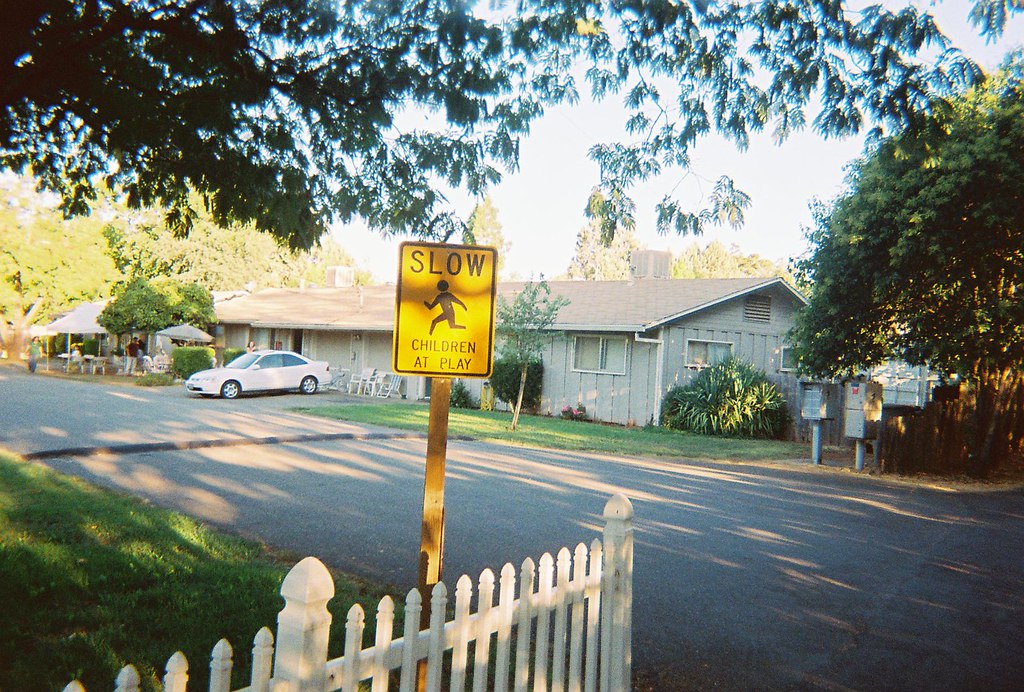
Slow in the suburbs could mean much more than this. Via D.C.Atty on flikr.
As the SlowBurbs blog says,
"The suburbs get a bad rap in the media, in rural feedlots, and at rooftop urban cocktail parties. Why? Because the ‘burbs contribute heavily to sprawl/encroachment, are prone to a sameness in architecture, and are equated with mediocrity when compared to sexy cities and bucolic rural towns. While we’re not ready to become suburban apologists – those problems above are real issues – we think it’s time we suburbanites explored how to make our lives in the ‘burbs richer, deeper and more meaningful.
Well said! On a rapidly urbanizing planet, in a part of the world where about half of us choose to live in suburbs, exploring how we can live more thoughtful, sustainable lives in suburban neighborhoods could be incredibly valuable.


(Just to clarify, I'm using the definition of a suburb as a residential neighborhood of primarily single-family homes on separate building lots; the political independence of an exurb or demographic information about residents is not assumed, since those factors vary so wildly from place to place.)


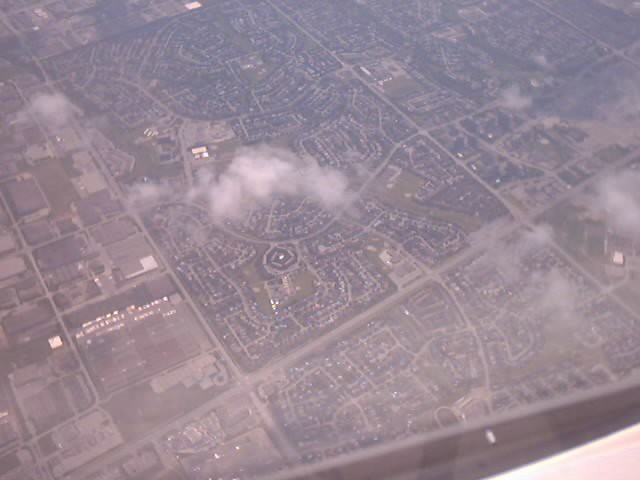
A suburb of Toronto seen from the air, via modowd on flikr

Most of the talk in urban planning circles prescribes increasing the density of cities, creating mixed-use neighborhoods with residential and commercial spaces side-by-side, and improving public transit and walkability (see the wiki on New Urbanism for more information on the prevalent approach). These are incredibly important strategies for rejuvenating the downtown core and inner-ring suburbs of North American cities. These neighborhoods were designed before or just after World War Two, before automotive use was commonplace, and so already have much of the infrastructure in place for a New Urbanist makeover. 


However, applying these strategies to newer outer-ring suburbs (on the edges of cities) is going to be more difficult work, because newer suburbs generally were not designed to be dense, walkable, mixed-use areas to begin with (There are exceptions built in the past ten years, like the subdivision I live in, but they tend to form islands of walkability that aren't connected to other neighborhoods.). Residents of suburbs will probably need to lead the way by advocating for better public transit and active transportation infrastructure and better access to key service businesses, so that their neighborhoods become less car-dependent. Cities will need to rewrite public policy so that infill development is encouraged (and affordable, and family-friendly), businesses can be established on residential streets by converting houses into live-work spaces, and school boards halt the cycle of neglecting inner-city and inner-ring schools so they can build new schools on the outer edge of town to service new suburbs. If this opinion piece is correct, we should also question the planning-policy dogma that constantly building new homes on the edges of cities is a major economic stimulator.


Urban planners will also need to proceed carefully with infrastructure upgrades and building projects in the suburbs. There are many reasons about half of us choose to live in suburbs: the ability to have pets and gardens, the increased indoor and outdoor space, and our perceptions of safety, privacy, housing affordability, and financial stability. So, any infrastructure changes we make to suburban neighborhoods should keep the positive attributes of those neighborhoods intact; for instance, even a low-rise infill development could have implications for the microclimates of neighboring properties' gardens, exposure of solar panels, and privacy of their yards. We also need to remember that the greenest brick is the one that already exists; it's much more sustainable for us to find ways to retrofit or renovate existing homes and infrastructure than to tear it down or abandon it and start over. Even with these constraints, we'll find innovative ways to retrofit car-dependent structures (like empty strip malls and parking lots) to increase  density and repurpose structures. Good examples of the sort of solutions we might consider can be found among the entries in the Reburbia design contest that Dwell and Inhabitat hosted in 2009.


A look at what's possible in a suburban backyard, via Earthworm on flikr
There are also lots of things we can do as private citizens to make our suburban lives slower and more sustainable; this isn't an exhaustive list, so please feel free to add your ideas in the comments.
  1. By supporting locally-owned small businesses in our neighborhoods, we help ensure that services remain available close by, so we aren't forced to drive to the big box district for day-to-day essentials. This is also better for the local economy, even if we shift only a fraction of our spending to local businesses. The same reasoning applies for supporting local farmers' markets and community-supported agriculture initiatives, so that local farmers can thrive and our local food security is increased.
  2. We can take a page from the urban homesteading movement (see my previous post for lots of links to resources) by growing at least a portion of our own food, in our own yards or in community gardens, using organic gardening and permaculture techniques, and pushing for carefully-crafted bylaws that allow backyard chickens and small livestock to be carefully kept on large suburban lots.
  3. By getting out of our cars and walking or riding our bicycles instead, we deepen our engagement with our neighborhoods and reduce our fossil fuel consumption. Figuring out how to bring bike networks to the burbs and make it easier to cycle there is going to be a key strategy for making our cities more sustainable and adapting as fuel becomes more scarce and expensive. Ideally, cities will have bicycle infrastructure not only for people who are commuting to daytime jobs, but also on-road sharrows and bike lanes, and separated paths on road margins or through parks, to connect with enough of the existing grocery-store-anchored strip malls to make them useful routes for suburban errand running. Better availability and affordability of practical bicycles designed to carry kids and cargo (like the Dutch bakfiets and Japanese mamachari) would also be a big step toward making bicycle use easier in the suburbs.
  4. We need to break the chain of thinking of our houses as disposable items that we can trade up for newer, bigger ones, as if they are cars (Currently, the average American homeowner moves or refinances every 5 to 7 years.). We should consider redesigning and renovating our homes to meet our needs, instead of moving to bigger spaces that are still poorly designed; and while we're renovating, we need to make our homes healthier to live in and more energy-efficient by carefully selecting replacement appliances, furniture, finishes, heating and cooling systems, insulation, and windows. If we can create home offices, studios, and workshops that allow us to work from home and reduce the time and energy we use commuting, so much the better.
  5. We can use the track record of existing schools, active community groups, mature landscaping and parks, walkable streets, older homes with character and charm, larger lot sizes, and location closer to the city core to promote living in mature communities to friends who might otherwise consider building a new house on the outer ring. 
  6. Get involved! Join community groups who are working toward sustainability goals, organizing reskilling workshops, creating community gardens, holding green festivals and social bicycle rides, or just organizing social and cultural events where neighbors get to know each other.
So, tell me: what's missing from my list? How are you making your life in the suburbs slower, more local, or more eco-friendly?