Showing posts with label mindful consumerism. Show all posts

Saturday, October 6, 2012

Edmonton Waste Management


Last week I went on a field trip with my fourth-grader to the impressive Edmonton Waste Management Centre (you can take a photo tour at the link; the photo is one I snapped with my phone of beautifully-designed posters inside their theatre where the tour begins). It used to be the Cloverbar landfill site, but over the years has morphed into a collection of buildings that includes North America's largest composter, a facility for sorting and baling recyclables from Edmonton's widely-admired recycling program, a paper recycling plant, and an electronics recycling facility beside the rapidly-shrinking former TV-henge. The sorting facility where organics are separated from the rest of the garbage bound from landfill will soon also boast a machine that crushes most of the debris into fluff to be used for gasification, with the ethanol and methanol from that process to be used to run the garbage trucks and the amount going to landfill to be reduced to about 10% of what comes in. The landfill itself, now closed, is being prepared to become a park, and items for landfill are currently shipped about 80km outside city limits. Time constraints meant we missed out on seeing the construction debris recycling facility.

On the whole, the tour was fascinating, and mostly conducted from the safety of enclosed overhead walkways. I was dumbfounded that the piles of stuff still being sent to landfill at this point looked like they were about half plastic that should have been recyclable, even with our city's enviable participation rate in the recycling program. I imagine it's much worse in other municipalities. The other thing that sticks with me is the worker at the electronics recycling plant starting decontamination before he left the floor of the warehouse at a shoe-washing station beside the door into the locker rooms. The hazardous-materials safety protocols also require them to wear a double layer of jumpsuit, helmet, gloves, eye protection, and heavy-duty dust masks.

The whole experience left me feeling conflicted - I am proud of our city for going to such lengths to keep things out of landfill and recover useful resources, but at the same time, I wonder if residents subconsciously use that to justify continuing to buy disposable items that in the long run are trashing the planet in other ways. I'm even more determined to consume less stuff now - especially since most of the machinery involved in sorting and disposing of our waste is pretty energy-intensive, and will become even more so once the gasification facility opens.

Thursday, September 13, 2012

Slow Living: The Hunt

You may have noticed that when I write about my wardrobe or my decor, or even my bicycles, I end up using the words "thrifted", "vintage", and "antique" a lot. I love the variety and sense of history that older objects bring to a space or an outfit. I love that antiques are green. I love hunting for them, learning about them, and using them. I love the stories that they tell.

While I've never joined a collectors' club, I've been a casual collector of antiques and vintage since before the days of eBay (oops, I just outed myself as old, didn't I?). Now that my kids are both in full-time school, I'm able to spend more time on The Hunt, so I thought it would be neat to make summaries of the cool things I've found a semi-regular feature on the blog. I'm going to include things found at thrift shops, antique malls, or on Kijiji since all three of those are dominated by vintage and nearly-new items in my city.

Here's what I've scored in the last couple of weeks:

The folding plywood chair by American Seating that I told you about yesterday.
Pyrex bowls, a fluted Fire-King bowl, and a small Pyrex casserole - all $5 each at Value Village -
because borosilicate is best.
A china creamer souvenir of Whitehorse, Yukon; a GourMates by Glo-Hill mid-mod chrome serving platter;
and a Birks house brand silver-plate tray to go with my silver-plate tea set. All from Value Village.
Also, for my wardrobe (no photos because I sent most of these things for dry cleaning):
- two wool pencil skirts and one linen tulip skirt
- two lace-trimmed black polyester camisoles from the '80s
- one white cotton button-up blouse

I'm doing the link party thing for the first time, so please be gentle with me. Today I have linked up with Simple Design's Thrift Haul (well, I will when the next one goes live on Monday - meanwhile check out her 5 rules of thrifting) and Cap Creations' Thrifty Love.

Monday, July 18, 2011

1000 Items Decluttering Challenge

I love that Daryl from Vermont Cottage has given herself a "countdown to simplicity" challenge, to get rid of 1000 items from her home this year. She says she got the idea from the 100-things-a-month challenge at the now-defunct Simple Living Network (not to be confused with the currently-en-vogue minimalist 100 Thing Challenge from Dave Bruno). There are still people posting about the challenge on that website's cousin, the Simple Living Forums - search on 'decluttering' and you'll find them. There are lots of other decluttering challenges out there, but I really like the simplicity of this approach. As a mom with kids of a certain age, I always have a box or a bag going that's collecting stuff to donate to Goodwill or Salvation Army or whoever, anyway, but keeping track of the numbers online could be a great motivator.

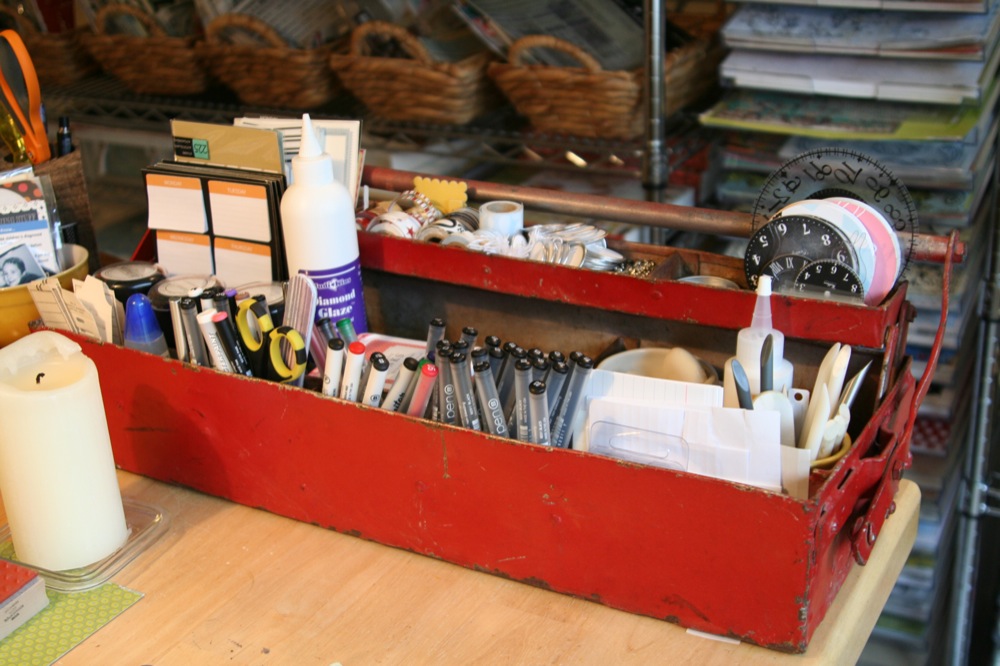
Maybe I'll get it together enough to have a studio that looks like this. Via: Ali Edwards on Flikr.

For my purposes, I'll not count consumables or paper as part of my item count. I have ridiculous amounts of paper to purge, as if it multiplies when the lights are off, and even with a 20 sheets = 1 item clause I'd get to 1000 before my home office was cleared out. I'd also rather focus on items that take up more psychic and visual space than a box of old papers, at least at this stage of the game.

I'm going to let myself count things that are leaving because they're being replaced - but I'll also subtract the number of items purchased. Hopefully I won't ever end the month with more items purchased than donated. =P

Oh, and for now, books will get a free pass, since (a) you can never have too many books, (b) we did a huge bookshelf purge a couple of years ago when we built-in bookshelves in our office/library open space, and (c) we're mostly buying digital editions these days.

Rather than waiting til the start of next month, I'll start counting from today. You'll be able to watch my progress in the box in the sidebar, and from time to time I'll do an update post to talk about what's working for me, what isn't, and which things I find I have real trouble letting go of.

Friday, February 25, 2011

Slow Fashion: Of Fashion Diets & LBDs

Slow Fashion can mean many things: a timeless or flexible cut that means you can wear it for longer; the use of high-quality and/or environmentally-sensitive fabrics, and socially- and environmentally-sensitive production techniques; buying vintage or swapping with friends; incorporating local crafting traditions into the design, or using local labour for the manufacture; making, embellishing, or mending your clothes yourself; or having your clothes custom-tailored (or knit or crocheted). Essentially it involves taking the principles of slow design and applying them to your closet.

Lots of people are blogging about their slow fashion resolutions, which have been dubbed 'fashion diets'. Kim at Preloved Reloved (via the Jorg & Olif blog) is going to buy only second-hand clothes for a year. Participants in Six Items Or Less are blogging about whittling down to, and living with, only 6 items of clothing for a month. Participants in The Great American Apparel Diet are not buying new clothes (but are allowed new accessories and gifted items) for a year; Australian blogger Kate from Fashion Fasting tackled the same challenge last year. Participants in Project 333 wear 33 items or less for a 3-month period. I'm sure there are many more individual bloggers I haven't discovered yet, since fashion diets and fasts have become popular enough that the idea has been covered by Trend Central and the New York Times. (Please, feel free to mention anyone I've missed in the comments!)


Perhaps the best-known fashion fast involves something most women already have in their closet: the essential Little Black Dress first designed by Coco Chanel. In year 1 of the Uniform Project, Sheena Matheiken wore a single versatile LBD (well, 7 copies of it) every day for a whole year, styled to create hundreds of different looks using only items that were already in her closet, or donated items that were either vintage or handmade. She was inspired, in part, by how kids who wear school uniforms always manage to find an inventive way to make the look their own - and she used the project as an inventive fundraiser for the Akanksha Foundation, who educate children living in slums in the Indian cities of Pune and Mumbai and are co-organizers of the InspirED conference on innovation in education for India (I highly recommend that you check out Sheena's TEDxDubai talk - hugely inspiring stuff.). Now that Sheena's year in the LBD is done, the Uniform Project has moved on to one-month Pilots where people wear one outfit for a month to fundraise for a cause of their choice, with the new outfit design (mostly LBDs, but also a jumper and a two-piece suit, so far) being sold on the site. They also sell a new version (tweaked for fit) of the dress that Sheena wore (and a sewing pattern for it). That is also the dress that One Dress Protest's Kristy Powell is wearing (without accessories) this year; Kristy's year in an LBD also differs from Sheena's in that instead of posting daily fashion photos, she's blogging about her thoughts and peoples' reactions to the sociological and philosophical implications of the project. 

Meanwhile the designer of the original version of the Uniform Project dress (Eliza Starbuck) also is selling it as part of her capsule collection through her Bright Young Things website, and profiling buyers who are doing one-month Wear-a-thons. 

You don't have to go on a full-on fashion fast to take a slow fashion approach to your wardrobe, though. Start simply, by going through your closet, keeping the stuff that fits well and makes you feel great, donating what you never ever wear, and thinking differently about what you buy. (Recent stories in UK newspaper the Daily Mail suggest that the average woman has 22 things in her wardrobe that she never wears, 12 of which don't fit. Wow.). I think the advice for creating a timeless capsule wardrobe in these two posts is a fantastic place to start (boys, try this link instead). 

Inspired by what Sheena of the Uniform Project has done, a friend (hi Asia!) and I planning a ladies-only fundraiser tweetup where everyone shops their closet, and wears a basic black outfit, accessorized creatively to showcase their personalities. We thought a cocktail party like this could be an amazingly cool way to simultaneously fundraise for Uniform Project's charity of choice and a local charity  (Like, cool enough to inspire copycat events in other cities.). We're calling it the Little Black Dress Party (or, #yegLBD using the hashtag convention of #cityEVENT); likely in April, with the date to be announced once we nail down the venue. I'll do another post with all the details then.

I'm also following my own advice and cleaning out my closet, and plotting which fashion diet to join. The prospect of using a big purge and one-month-or-more challenge to help define my personal style and explore my relationship to fashion and consumerism is really exciting!

Thursday, February 24, 2011

On Trends and Slowness

Jenny at Little Green Notebook has started a compelling discussion on her blog, about how being a design blogger (or a devoted blog reader) makes one hypersensitive to whether an interior design trend is 'over' before it has even hit the mainstream:
http://littlegreennotebook.blogspot.com/2011/02/are-we-overexposed-to-design.html

I had so many thoughts on this that I couldn't summarize them in a pithy tweet or one-paragraph comment.

When you blog daily about a topic, you put yourself under pressure to create original content (or original images), and you become a trendhunter, whether you mean to or not. There is nothing wrong with being on the cutting edge of knowledge in a field. There is nothing wrong with being aware of your average readers' (or clients', or audience's, or friends') level of literacy and expectations about a topic. However, you should never let that awareness alter your writing (or decorating, or fashion sense) so that what you produce isn't an authentic reflection of who you are. Your best work will always be a showcase for your personality, your artistic voice, and your expertise.

Of course that is much easier said than done. Most of us are still finding our voices, aren't we? That's part of why we blog, or keep journals and sketchbooks and portfolios of our student projects. And it can mean we're unduly influenced by trends.

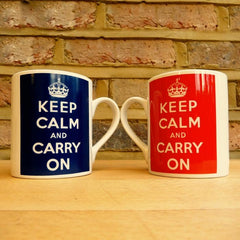
For me, part of finding my authentic voice and design vision is exploring the slow movement. It can be really tricky to incorporate the principles of the slow movement into the parts of your life that tend to be trend-driven. The worlds of fashion and decor are ruled by novelty, consumerism, and marketing; if they weren't, we wouldn't give a sweet damn what colours the industry experts have forecast, or whether our shoes have round or pointy toes. Furthermore, marketers are speaking to our deepest desires when they craft their messages for consumers. Our clothes are a marker for the tribe we belong to, or the tribe we want to belong to; we don't just buy fabric to cover our bodies, we buy our identities and our aspirations (Kristy at One Dress Protest has recently done a genius post about the blurry line between fashion and tribal uniform.). We tell ourselves a story about the life we wish we lived, and we shop for housing and furniture accordingly. We aspire to be slim and healthy, and we buy exercise equipment that gets used mostly as a clothing rack. We want to appear worldly, so we buy a ceramic replica Buddha statue and put it on the fireplace mantle or in a garden bed. We want to appear well-read, so we buy classic literature and glossy art history books and display them prominently on our shelves and coffee tables. We want to be stoic and cheerful about the Current Economic Uncertainty so we buy posters and coffee mugs emblazoned with World War Two propaganda.

Source. Yeah, I own one too.

Don't get me wrong: this is no anti-consumerist rant. There's nothing wrong with expressing ourselves and manifesting our desires through our purchases, or with craving novelty, provided that we do so in moderation. Those are universal impulses. However, these realities can make choosing or blogging about slow fashion or slow decor a delicate balancing act. How do you keep your home and wardrobe current enough to keep them from feeling stale, without treating their contents as disposable? How do you present interesting new trends without becoming a pawn in a corporate marketing strategy, or broadcasting aspirations that conflict with the whole point of the slow movement?

The slow movement isn't about the self-deprivation of buying nothing; it's about becoming a mindful consumer. It can mean being more self-aware and thinking hard about why you want to buy an item and whether you'll really use it. It can mean buying fewer, higher-quality items (and the different sort of abundance that brings into your life); buying locally-made and sustainable items; buying handmade or custom-made; choosing timeless or durable styles; or buying vintage or antique (Hopefully more than one of these criteria will fit your purchase!). It might mean choosing easy-to-live-with neutrals for your home and wardrobe, and bringing in trends through thoughtfully-chosen accessories - or it might mean fearlessly embracing your signature style and your favorite colours, and only buying what you truly love.

(I'll be posting specifically about applying those ideas to my wardrobe in the coming week.)

So, back to those overexposed trends in blog-land... As I've already confessed, I have a Keep Calm knockoff coffee mug. Yup. That poster design has become ridiculously ubiquitous, but my grandparents met in London during The Blitz - and my Dad was born there. For me, it has a special resonance, and it doesn't matter that it's So Over. I bought it because I love it and it's meaningful.

So for me, a Keep Calm mug is the perfect object to represent both overdone trends and slow design principles. What trend that's So Over has become a cherished object in your life?