Wednesday, September 28, 2011

Slow Making, Slow Craft, and Slow Cloth

There are a growing number of artisans who are applying the slow movement's principles to the world of crafts, and I'd like to draw a little attention to their work and their writing.

Australian blog Slow Making have been intermittently publishing in-depth posts since 2006 on topics from sourcing wood to printmaking to philosophical musings on the withered role of the seamstress in our society - it's a truly fascinating read. Their Manifesto is:
"1. To strive for appropriate excellence in the making process.2. To make objects that enhance the life of the user.3. To know the origins of our materials, ensuring that they respect the country and the communities who produced or harvested them, and are from sustainable sources.4. To make objects that will last, can be easily repaired when necessary and are made using materials and processes that do not harm the makers, the community or the environment.5. To deal with our co-workers, clients, suppliers and sellers in an ethical and fair manner.6. To foster, utilise and pass on skills that enhance the making process.7. To enjoy and relish the way of slow making."
The travelling exhibit Taking Time: Craft and the Slow Revolution at their last venue,
via Making A Slow Revolution.
Other Slow proponents from the world of fine craft are more explicit (as per the principles of slow design) in discussing the mindfulness, localness, interactiveness, and community-building aspects of their work, in addition to the temporal and qualitative aspects of their process. All of these figured in a travelling exhibit from Birmingham's Craftspace entitled Taking Time: Craft and the Slow Revolution, curated by Helen Carnac, which wrapped in June 2011 and was followed in July by a Slow Summit with slowLab's Alastair Fuad-Luke in July. The blog that chronicles the exhibit proposal and the reflections of several of the contributing artists is well worth reading. Everyone associated with that project seem to use the term "slow craft" preferentially.

There is also a community of slow makers in the textile world who have adopted the term "slow cloth" for their work; Elaine Lipson of Red Thread Studio has a fantastic definition in her "10 Qualities Of Slow Cloth" in her sidebar. I won't quote it here, but she definitely speaks my language: joy, contemplation, skill, history, community, diversity, quality. I also recommend you check out her article on slow cloth for HandEye magazine, and the Slow Cloth group on Facebook for ongoing discussions.

The slow movement seems like a natural fit for anyone who is immersed in a life where process and product are intimately connected - so I'm actually a little surprised that I didn't find more artisans talking about the slow movement in connection to their work when I went looking. Did I miss a term that's being used instead?

Friday, September 23, 2011

Slow Living: A Cardboard Rocketship In 12 Easy Steps

Although there are (fairly expensive) cardboard rocketship playhouse kits you can buy online, there's really only one good DIY post. (There are also a couple of cool make-your-own recycled rocketship toy tutorials, and a ridonkulously awesome photo on DeviantArt.) So I thought I'd better take a few photos and write up our modest improvised attempt. It was a bit time-consuming, but both super fun and really fairly easy...

Step 1: Gather your supplies. You'll need one huge cardboard box, a bunch of smaller cardboard boxes, and miscellaneous stuff from your recycling bin (or the reuse centre, if your city has one) for decorating the thing. We collected ours over the course of a couple of months. You'll also need scissors and a box-cutter, industrial-strength glue, 2 (or more) cans of silver spray paint, and 3 (or more) rolls of silver duct tape... as I discovered after I had already started.


Step 2: Use the duct tape to tape up the bottom for a solid base, repair any tears, and tape the top flaps of the box to each other in the open position. Start to construct roof; run out of duct tape.

Step 3: Box-cutter time, for grownups only. Slice an upward-opening hatch door into one side of the box. Cut the flat lip off a round clear-plastic cover (from premade graham-cracker-crumb crusts and the like) and trace around it where you'll be placing portholes, then cut the cardboard out with the boxcutter. Ditto with any other openings you'll be making.


Step 4: Now that you have an opening you can get through, add duct tape to the inside of your giant box to make the 'floor' stronger and more tear-resistant. Also, glue a handle onto your hatch at this time to make the door easier to open. Ours is a square block of styrofoam with a larger flat square of high-density foam glued to the top.


Step 5: Spray paint the cardboard silver, inside and out. (You'll notice I did this in an area where our lawn was already mostly dead from drought and in dire need of repair.) Realize that the styrofoam you used for part of the hatch door handle melts when the solvent from the spray paint touches it. Run out of spray paint. Let dry at least 30 minutes - preferably much longer since it will reek to high heaven of the solvents in the spray paint.

Whoopsie.

Step 6: Since it's looking like rain, move the whole thing into the garage, and head to the store for more duct tape and spray paint so you can complete the project later.

Step 7: Rain stopped? Great, move back outside and resume roof construction. Basically the idea is to cut cardboard into triangles, like the segments of an umbrella, and attach them to each other with duct tape, to create a cone or dome for the roof. I'm not entirely happy with how ours turned out - it looks more like a house roof than anything - but the kids are thrilled regardless.

Step 8: Make it look more rocket-like. Add cardboard fins (my kids decided against these) or 'thrusters' (ramen soup bowls) to the exterior of the rocket, and a 'control panel' (egg carton) and other widgets that will need spray paint to the interior of the rocket. Let any glue used dry thoroughly.

Step 9: Finish spray painting outside and inside. (Since the kids will be adding lots more colour themselves inside, we decided not to worry about the fact that we ran out of spray paint again before it was done.) Let dry at least 30 minutes - or in our case, overnight in the garage.

Step 10: Fancy windows! Clear plastic 'portholes' (graham-wafer pie shell covers) and 'viewscreens' (plastic from a large box a toy was sold in) can be glued and duct taped into place at this point.


Step 11: Add the details. Draw on rivets, identification numbers, and so on using black permanent marker acrylic paint. Paste on printouts of space agency logos (NASA's meatball is via Wikipedia). Red and orange paper can be glued to the thrusters to make 'flames' now - or if you have a mouthy puppy like we do, red and orange paint. If you're really clever you might be able to add moveable dials inside the rocket as well - if you do figure out how to do that, leave me a comment so I can add one to mine, mmkay?

(DARS = Boychild Girlchild Rocket Service)
Before we painted the rivets and thruster flames.
Also, notice how it's leaving glittery dust on everybody's clothes, presumably spray paint dust? Give it a quick vacuum or wipedown. Preferably before adding the details, instead of afterward like I did.

Since markers weren't showing up,
we went with stickers for the numbers on our buttons.
Painted rivets and knob instructions.
The more detail you add the better it looks!
Step 12: Set up in its permanent (indoor) location and let playtime commence!

Boychild couldn't wait for me to finish painting the rivets and move it.
"Mummy, clone troopers wear their helmets in outer space." Alrighty then.
The adorable astronaut costume was a gift a couple of years ago.
PS: I'll add another photo in a couple of days to show the results of further customization by the kids with acrylics and puffy paint, and repairs since while I have been writing this two thrusters have already come unglued!

Wednesday, September 14, 2011

Monthly Slow News Summary: September 2011

On Slow Food:
Bethan Laura Wood's Stain ceramic cups are treated with a pattern
that is revealed with time and use as the material becomes tea-stained.
Not new (from 2007), but such a brilliant example of Slow Design that I had to share.
More recently she has used the slow design principles to create
handmade lace Confetti and a chandelier made of ice.
On Slow Design, Slow Home, and Eco Products:

Missoni's line of fashions and homewares for Target was introduced early this week
and has probably already sold out.
I wonder whether their legendary Italian-made quality was diluted for the mass market.
Someone do a proper analysis of whether those items are actually slow-fashion or fast-fashion, mmkay?
Artwork via Gabriela Romero on Pinterest - please let me know the artist if you recognize it!
On Slow Fashion:
On Slow Living:
Starting September 17th, an exhibit of Slow Tech concepts will be part of this year's London Design Festival.
via Protein.
On Slow Travel:
On Sustainability and Environment:

Monday, September 12, 2011

First Day Of School


I'm so happy that this year both my kids can walk or bike to school!

Saturday, August 13, 2011

Composting Update

It's been a few months since I posted about our fantastic bokashi composting system that I'm using for our kitchen scraps. (For more on bokashi, check out this recent article on Sustainablog.) We're now long since finished our first round with bokashi, and have been waiting to start the next step. (The plants that I fed the tea in the meantime have definitely perked up a bit, although some of them developed some white fuzz on the soil surface from the new beneficial microorganisms that the tea added.)

Enter our new tumble composter:


After a lot of research, I went with this one from Lee Valley, although it was more expensive than others on the market, because it had better reviews and the ability to make compost tea. It's also Canadian-made. (The other one I had wanted, while considerably cheaper, has been knocked by reviewers for a leaky hatch that also can let rainwater in, doesn't allow tea collection, and it's made on another continent.)

We do also have one of these things in our garden:


But by putting it in a really sunny spot next to the house to encourage the composting process, I also put it in too dry of a spot, and just couldn't seem to keep it wet enough to keep the process going. Drying out will be much less of an issue with our new rolling contraption.

Here are some photos of what we put in, back in early July:


- for the green stuff, some salad greens and veggies that were starting to go slimy in my fridge, some fresh lawn clippings and dandelion leaves, and trimmings from the garden (a lot of the weeds I get can grow from root pieces so I'll send those off with the garbage for my municipality to compost in their award-winning industrial-strength composting system instead)


- for the brown stuff, the top layer from our old composter - which are lawn clippings that have been left to dry out (we don't use pesticides or herbicides so I feel comfortable with that) - in about equal proportion to the greens already in the new bin


- the rather yucky contents of the bokashi composter, which are thoroughly pickled and just need the finishing step where the pH is brought back to neutral


- a couple of dried-up organic veggie transplants that never made it into the garden, along with the soil they were in

Oh, and a handful of the bokashi bran for good luck - even though this will be an aerobic process, not anaerobic like in the bokashi container in the kitchen - and a couple of handfuls of topsoil. I also rinsed the bokashi composter out with the garden hose, and poured that liquid into the tumble composter so that everything was nice and damp. Since then, we've tried to give the drum of the composter a solid tumble once a day. We haven't been super diligent about doing it daily, but the kids are pretty enthusiastic about helping to turn the drum.

Today, since we had more fresh grass clippings, dried grass clippings, some dead annuals, and kitchen scraps to add, we opened it to take a look. The volume of the material in the composter has reduced down, in the space of a month, from half-full to about a quarter-full, although it's not much lighter. The smell and the presence of flies definitely indicate that the material is rotting. I'll have to check with my composting gurus to make sure it looks like it is supposed to, but we never got the other style of composter to the point where is smelled, so I'll view that as progress. =D

After topping up the drum to about two-thirds full of material and giving it a solid tumble, I closed it up again, and the plan is to tumble it daily and check on it weekly from this point on.  Wish me luck!

Wednesday, August 10, 2011

Monthly Slow News Summary: August 2011

This month I have a doozy of a reading list for you. Let's get right to it, shall we?

A wonderful sign from Santorini, Greece, via.
On Slow Food:
On Slow Fashion:
On Slow Home, Slow Design, and Eco Products:
On Slow Living:
On Slow Travel:
On Sustainability and Environment:

Tuesday, July 19, 2011

Slow In The Suburbs?

When we talk about the challenges that we face in a future of fossil fuel scarcity and climate change, different solutions appeal to different people.


Some people react to these ideas by going back to the land and building their off-grid self-sufficient-ish dream home on a rural acreage or hobby farm; a few go even farther in the direction of survivalism. It's an attractive strategy, and it's likely that we'll need to revive local rural economies and increase the number of small farms serving local customers if food insecurity is a consequence of shorter supply chains, particularly for perishable items, in an overpopulated post-peak-oil world.

However, rural life is not for everyone, and withdrawing from city life would mean not being part of an exciting period of urban adaptation, during a time when the whole planet is becoming increasingly urbanized. It's reasonable to expect that innovation in urban planning and changes in the way we live in our cities will make the biggest difference to the quality of life of most people, and the biggest changes to our collective carbon footprint. In many developing countries, slums and shantytowns of refugees and economic migrants into cities will provide the greatest challenges - but in North America, where our relative affluence and already-urbanized population will blunt those effects, the sprawling suburbs of most of our cities will need to be transformed. A huge percentage of people in North America live in suburban single-family homes. By 2000, census figures showed 50% of Americans lived in suburbs - and by 2004 The Nation was noting that there were almost as many suburbanites as core-dwellers living in poverty, and skewering the stereotype of suburbs as rich white enclaves. The numbers are fairly similar for Canada, with about half of residents of metropolitan regions living in low-density neighborhoods according to a 2008 analysis. We also know that our buildings are responsible for 35% of North American carbon dioxide emissions, and improving them will be the quickest and cheapest way to reduce our impact on climate change.


Just maybe, being an engaged citizen living the slow life and advocating for sustainability in the suburbs will be the best way to make a difference. 

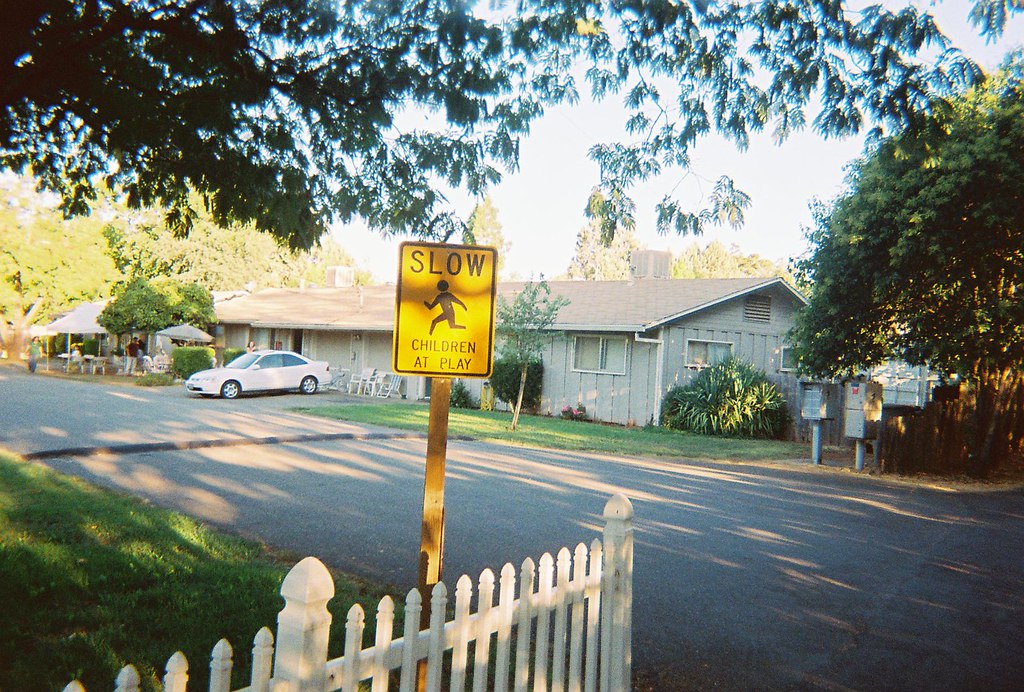
Slow in the suburbs could mean much more than this. Via D.C.Atty on flikr.
As the SlowBurbs blog says,
"The suburbs get a bad rap in the media, in rural feedlots, and at rooftop urban cocktail parties. Why? Because the ‘burbs contribute heavily to sprawl/encroachment, are prone to a sameness in architecture, and are equated with mediocrity when compared to sexy cities and bucolic rural towns. While we’re not ready to become suburban apologists – those problems above are real issues – we think it’s time we suburbanites explored how to make our lives in the ‘burbs richer, deeper and more meaningful.
Well said! On a rapidly urbanizing planet, in a part of the world where about half of us choose to live in suburbs, exploring how we can live more thoughtful, sustainable lives in suburban neighborhoods could be incredibly valuable.


(Just to clarify, I'm using the definition of a suburb as a residential neighborhood of primarily single-family homes on separate building lots; the political independence of an exurb or demographic information about residents is not assumed, since those factors vary so wildly from place to place.)


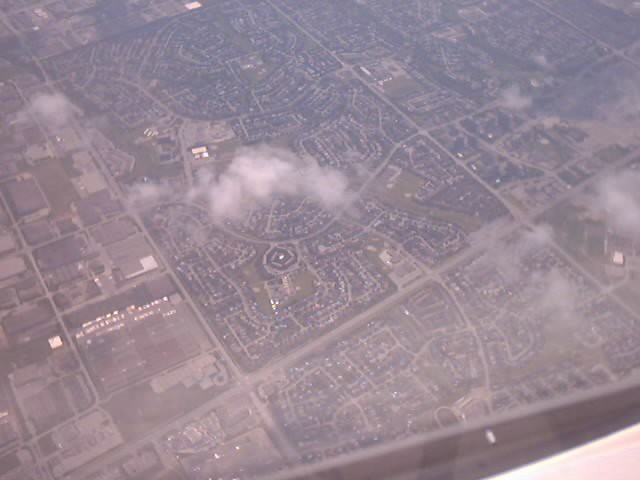
A suburb of Toronto seen from the air, via modowd on flikr

Most of the talk in urban planning circles prescribes increasing the density of cities, creating mixed-use neighborhoods with residential and commercial spaces side-by-side, and improving public transit and walkability (see the wiki on New Urbanism for more information on the prevalent approach). These are incredibly important strategies for rejuvenating the downtown core and inner-ring suburbs of North American cities. These neighborhoods were designed before or just after World War Two, before automotive use was commonplace, and so already have much of the infrastructure in place for a New Urbanist makeover. 


However, applying these strategies to newer outer-ring suburbs (on the edges of cities) is going to be more difficult work, because newer suburbs generally were not designed to be dense, walkable, mixed-use areas to begin with (There are exceptions built in the past ten years, like the subdivision I live in, but they tend to form islands of walkability that aren't connected to other neighborhoods.). Residents of suburbs will probably need to lead the way by advocating for better public transit and active transportation infrastructure and better access to key service businesses, so that their neighborhoods become less car-dependent. Cities will need to rewrite public policy so that infill development is encouraged (and affordable, and family-friendly), businesses can be established on residential streets by converting houses into live-work spaces, and school boards halt the cycle of neglecting inner-city and inner-ring schools so they can build new schools on the outer edge of town to service new suburbs. If this opinion piece is correct, we should also question the planning-policy dogma that constantly building new homes on the edges of cities is a major economic stimulator.


Urban planners will also need to proceed carefully with infrastructure upgrades and building projects in the suburbs. There are many reasons about half of us choose to live in suburbs: the ability to have pets and gardens, the increased indoor and outdoor space, and our perceptions of safety, privacy, housing affordability, and financial stability. So, any infrastructure changes we make to suburban neighborhoods should keep the positive attributes of those neighborhoods intact; for instance, even a low-rise infill development could have implications for the microclimates of neighboring properties' gardens, exposure of solar panels, and privacy of their yards. We also need to remember that the greenest brick is the one that already exists; it's much more sustainable for us to find ways to retrofit or renovate existing homes and infrastructure than to tear it down or abandon it and start over. Even with these constraints, we'll find innovative ways to retrofit car-dependent structures (like empty strip malls and parking lots) to increase  density and repurpose structures. Good examples of the sort of solutions we might consider can be found among the entries in the Reburbia design contest that Dwell and Inhabitat hosted in 2009.


A look at what's possible in a suburban backyard, via Earthworm on flikr
There are also lots of things we can do as private citizens to make our suburban lives slower and more sustainable; this isn't an exhaustive list, so please feel free to add your ideas in the comments.
  1. By supporting locally-owned small businesses in our neighborhoods, we help ensure that services remain available close by, so we aren't forced to drive to the big box district for day-to-day essentials. This is also better for the local economy, even if we shift only a fraction of our spending to local businesses. The same reasoning applies for supporting local farmers' markets and community-supported agriculture initiatives, so that local farmers can thrive and our local food security is increased.
  2. We can take a page from the urban homesteading movement (see my previous post for lots of links to resources) by growing at least a portion of our own food, in our own yards or in community gardens, using organic gardening and permaculture techniques, and pushing for carefully-crafted bylaws that allow backyard chickens and small livestock to be carefully kept on large suburban lots.
  3. By getting out of our cars and walking or riding our bicycles instead, we deepen our engagement with our neighborhoods and reduce our fossil fuel consumption. Figuring out how to bring bike networks to the burbs and make it easier to cycle there is going to be a key strategy for making our cities more sustainable and adapting as fuel becomes more scarce and expensive. Ideally, cities will have bicycle infrastructure not only for people who are commuting to daytime jobs, but also on-road sharrows and bike lanes, and separated paths on road margins or through parks, to connect with enough of the existing grocery-store-anchored strip malls to make them useful routes for suburban errand running. Better availability and affordability of practical bicycles designed to carry kids and cargo (like the Dutch bakfiets and Japanese mamachari) would also be a big step toward making bicycle use easier in the suburbs.
  4. We need to break the chain of thinking of our houses as disposable items that we can trade up for newer, bigger ones, as if they are cars (Currently, the average American homeowner moves or refinances every 5 to 7 years.). We should consider redesigning and renovating our homes to meet our needs, instead of moving to bigger spaces that are still poorly designed; and while we're renovating, we need to make our homes healthier to live in and more energy-efficient by carefully selecting replacement appliances, furniture, finishes, heating and cooling systems, insulation, and windows. If we can create home offices, studios, and workshops that allow us to work from home and reduce the time and energy we use commuting, so much the better.
  5. We can use the track record of existing schools, active community groups, mature landscaping and parks, walkable streets, older homes with character and charm, larger lot sizes, and location closer to the city core to promote living in mature communities to friends who might otherwise consider building a new house on the outer ring. 
  6. Get involved! Join community groups who are working toward sustainability goals, organizing reskilling workshops, creating community gardens, holding green festivals and social bicycle rides, or just organizing social and cultural events where neighbors get to know each other.
So, tell me: what's missing from my list? How are you making your life in the suburbs slower, more local, or more eco-friendly?