Wednesday, November 6, 2013

Harvesting and Preserving: Green Tomato Mincemeat

This post is part of the Canadian Food Experience project (also on Facebook) proposed by my friend Valerie Lugonja, who is a board member of Slow Food Edmonton. The project began June 7th, 2013. As we (participants) share our collective stories across the vastness of our Canadian landscape through our regional food experiences, we hope to bring global clarity to our Canadian culinary identity through the cadence of our concerted Canadian voice. Please join us. 

My October was bananas, thanks to municipal election madness over at the Local Good's blog, so this month you'll get a two-fer: my preserving post and my harvest post, all in one. A childhood harvest memory that I cherish, and hope to recreate next year here in Edmonton, is having such a bounty of tomatoes from my mother's garden that we couldn't possibly eat them all. Usually, Mom planted three different varieties: a cherry tomato for salads, a plum tomato, and one other. I remember the flavours but not the names - I'll have to ask her which cultivars they were (update: Mom says she planted the Beefeater and Scotia cultivars). There would be big brown paper bags of them lined up on the windowsill over the sink, to induce them to ripen, but inevitably we'd need to use them up before they all had a chance to get red. So, it was always my maternal grandmother's Green Tomato Mincemeat recipe to the rescue. It makes a wonderful pie filling, and since there is no actual meat in it, it's suitable for vegetarians and vegans.


Photo via Rhubarb & Honey who shares a very similar recipe!
Pearl's Green Tomato Mincemeat

3 pounds (10 cups) green tomatoes
3.5 pounds apples (Gravenstein apples would have been used)
2 cups brown sugar
1 pound seeded raisins
1 pound seedless raisins
1 tbsp salt
1/2 cup oil
1/2 cup cider vinegar
3/4 cup apple juice
2.5 tbsp cinnamon
2 tbsp cloves
1 tbsp nutmeg
2 lemons, grated and juiced

Cut tomatoes in quarters and blend; drain.
Add chopped apples (not peeled!) and other ingredients except lemon juice.
Cook slowly 2-3 hours adding apple juice as required.
Add lemon juice just before bottling.
Can be frozen or canned.

(Sorry, no photo - I haven't had a chance to make this yet! I'll edit this post to add photos as soon as I can, but I wanted to share the recipe right away.)

PS: Oooh, look, Valerie posted her green tomato mincemeat recipe too, with the most mouthwatering photos. Her proportions and spices (candied ginger!) are a bit different from my Nana's, be sure to compare them!

Tuesday, October 1, 2013

Indigo Vat Party, and Sharpening The Synthetic Vat

On Saturday, I had a few friends over to play with indigo. I provided the space, food, reference books, whatever equipment I had lying around, and some clothes lines; Lesley brought synthetic indigo stock solutions and her equipment; and everyone brought their own fabric, clothing, and yarn to dye. Deanna also brought three of her students in a high-school fashion course. It was so much fun!!

Fresh vat of white indigo. 

Monday, September 30, 2013

Cider 101 with Shovel & Fork

On Sunday, I got to take a cider-making course with Chad and Kevin from Shovel & Fork. Lucky me! If you are in or near Edmonton, you need to check them out - they do all kinds of fantastic skill-sharing courses, from kitchen gardening to butchery. With their permission, I'm sharing a few photos from the course. Naturally, for the complete details, you really ought to sign up the next time this is offered.

We started the rainy morning with a quick chat about fruit choice, then some of us picked apples from Kevin's tree, while the rest worked at the fruit crushing station and cut the larger apples. Those are adapted garburators that we're using to crush the fruit. You can also go old school and use a 4x4 and a bucket. Don't used a steam extraction juicer, which cooks all the great flavours out of the juice.

Saturday, September 7, 2013

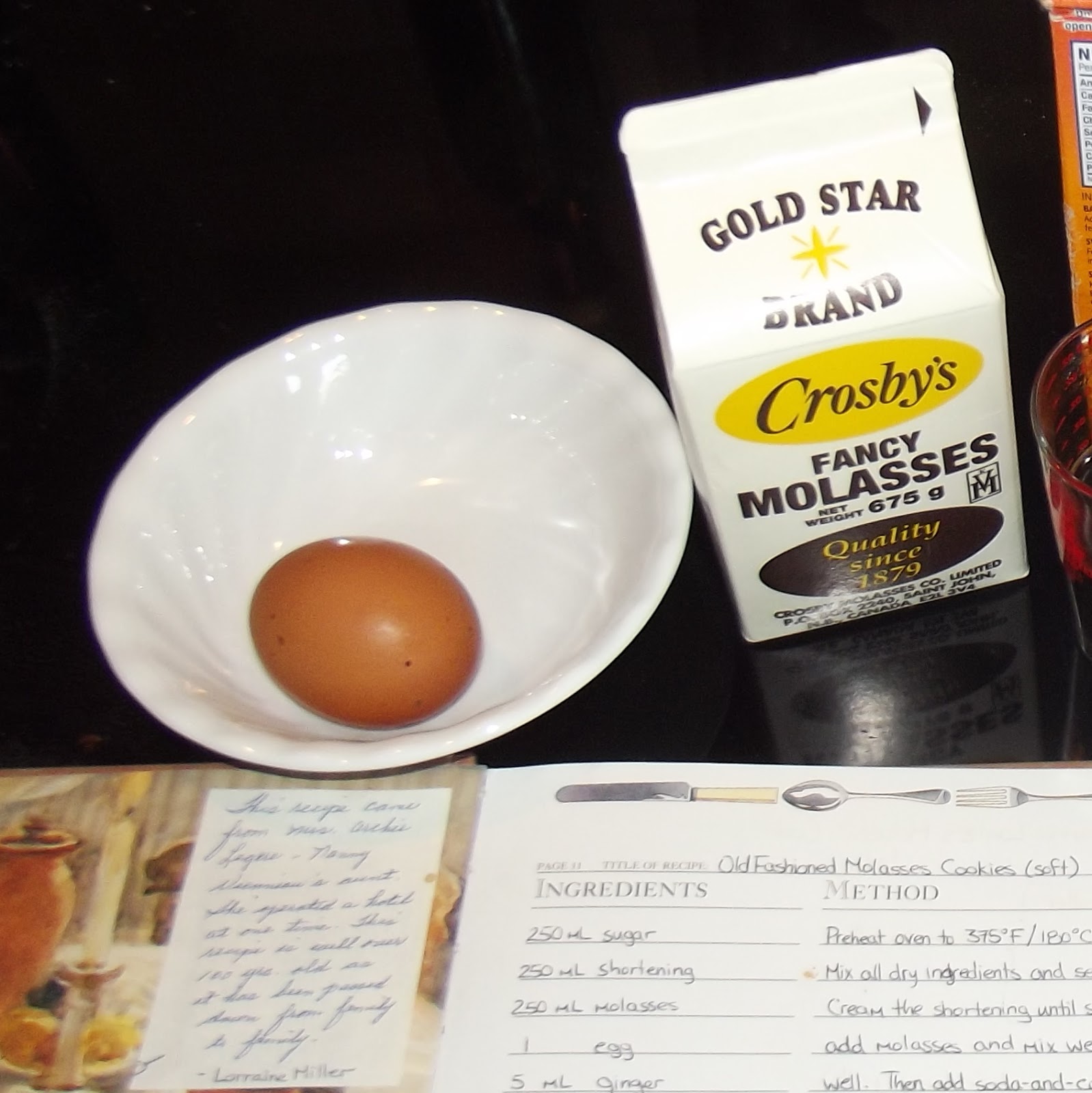
My Cherished Canadian Recipe: Old-Fashioned Molasses Cookies

While I have lived in Edmonton since 1994, I grew up in Nova Scotia, in a family that has been in that part of the world for generations. I've mentioned my family background before, a mishmash of South Shore German and Swiss, Annapolis Valley English-via-Connecticut Planters, Parrsboro-area English-via-Massachusetts Loyalists, and a series of adventurous brides who crossed The Pond from England to make new lives with dashing sea captains. The recipe I'll share today comes from my husband's family. His dad's people were English sailors who stayed in Halifax when their time in the Navy ended, and Gaelic-speaking Scots whose families came to Cape Breton during the Highland Clearances; his mom's folks are Acadian French who found refuge in the wilds of New Brunswick and married Quebecois families after the Expulsion. (Some early Acadian families are also Metis by blood, although records are so scarce that mitochondrial DNA tests are often the only evidence, and the Metis families were integrated into Acadian culture, instead of developing a distinct culture as happened on the Prairies.)


Molasses was a kitchen staple in the Maritimes as a result of the trade triangle between the Caribbean, Nova Scotia, and Great Britain. We shipped timber out - or turned the timber into sailing vessels - and the ships returned laden with molasses from the sugarcane plantations. (Rum is the favoured distilled alcohol of the Maritimes for the same reason.) For more on the history of molasses as a Canadian food, check out this great post from Bridget Oland from earlier in the Canadian Food Experience series.

This soft molasses cookie recipe is a family favourite that is now at least 120 years old. It came from Mrs. Archie Legere, an aunt of my husband's Acadian grandmother, who operated a hotel at one time (at least, according to the notes in the margin of the recipe card made by my husband's Aunt Lorraine Miller). I believe it originally would have been made with butter instead of shortening, and been written with imperial measurements instead of the metric provided by Aunt Lorraine (who was a high-school home economics teacher). 


Wednesday, August 7, 2013

A Canadian Food Hero: Chef Craig Flinn

Full disclosure: I've known Craig since high school in Dartmouth, Nova Scotia, when we sang together in the choir. He's a funny, easy-going guy with a rich, deep singing voice. But for today's Canadian Food Experience assignment - to choose our Canadian food hero - I chose Chef Craig Flinn because his dedication to cooking with fresh, seasonal, local food and celebrating Canada's rich, varied culinary heritage was my first real exposure to slow food. His first cookbook, Fresh & Local, remains one of my favourites after years of use, and his other books get regular use in my kitchen at home. If you're visiting Halifax, his trio of restaurants on Barrington Street - Chives Canadian Bistro, Ciboulette Cafe, and newly-opened lunch spot Two Doors Down - are an absolute must. While Craig is one of Nova Scotia's culinary stars, he's not as well known as he really ought to be outside of the Maritimes. Let's change that.
photo courtesy of Chef Craig Flinn (via his Facebook feed)

Saturday, July 20, 2013

Slow News Summary: the summery edition

There's so much great stuff to share from the past couple of months! Let's get right to it:

On slow design, slow making, and slow home:
On slow fashion:
I love this idea, via Nutfield Genealogy: an old family recipe, woodburned as it appears on the original recipe card, into a cutting board. 

On slow food:
On slow travel:
On slow living, slow parenting, slow money, and so forth:
  • In praise of slow tech - as in older technologies that force us to slow down, think harder, and focus our creative energy.
  • Another take on slow tech: high tech, but human-centred, following the slow food tenets of "good, clean, and fair". What an interesting alternative to the low-tech/handmade version of slow tech!
  • Scott Laningham on The Slow Fix, with an interview with Carl Honore
  • A review (en francais) of the gorgeous-looking SLO magazine.
  • Diane MacDonald on Slow Consulting.
  • Australia's Storyology talk slow journalism.
  • American friends, check out Slow Flowers to find florists who design using US-grown blooms. (Here's hoping they expand their reach to the rest of North America.) It's from Debra Prinzing, who literally wrote the book on local bouquets.
On sustainability and environment:

Thursday, July 18, 2013

U of A Surface & Textile Design course

Lucky me, last week I got to go to the world's coolest summer camp!

As part of the University of Alberta's Residential Interiors certificate program (which I'm still gradually completing), they are offering a handful of courses as one-week intensives (instead of a weekly evening class), including Surface and Textile Design. Our instructor for this very hands-on studio course was fibre artist Lesley Stafiniak. We learned wet-felting, needle-felting, shibori, batik, and silk-painting techniques, watched a documentary about natural dyes, and discussed pattern creation techniques. My mind is still buzzing with all the possibilities.