Thursday, March 22, 2012

Slow Home: Do You Know Your Home's History?

One of the central goals of the slow movement is to foster a sense of community and connection, and researching the history of your home is a great way do that. Here's a case study on how to go about it, using the house my husband and I just bought. I thought it would be fun to show that even a relatively new home can have a history worth looking into!

If you live in an older house, you may find the tips and resources in the "Be your own House Detective" articles in the October 2010 and November 2010 issues of UK genealogy magazine Family History Monthly very useful. There are also great resources at the UK's National Archives and Bricks and Brass, and at Active History (for Canada) and the cities of Edmonton and Calgary - try adding your municipality to the search terms 'researching history of house' to find relevant resources for your area.

{Step 1: Write down what you know about your home's previous owners, builder, architect (if any), location, and prior land uses.}

Our new house was built in neo-Craftsman style in 2008 by Alberta-based builder Homes By Avi, as a  spec home using their "McCullough A2" plans (according to the builder's records; the MLS listing had it as a former showhome). The subdivision in which it was built is new enough that when we moved to our current home in an adjacent subdivision in 2001, the land was farmland used for growing canola and wheat, and deer and the occasional moose were routinely seen grazing along the road. It is still an active construction zone with only about a third to a half of the lots completed. The land is adjacent to a ravine that has been designated a wildlife refuge, called MacTaggart Sanctuary. A lovely unpaved walking path winds through the Sanctuary along Whitemud Creek's wooded banks past an active beaver colony, and the path connects to paths through our city's river valley and comprises part of a huge hiking trail network called the Waskahegan Trail

I snapped this photo from the edge of a beaver dam in MacTaggart Sanctuary last October.
Nearby there was a trail of flattened grass on the bank, where the beavers like to slide into the creek.
{Step 2: Look for documentation and clues to the house's former life outside and inside the home.}

We don't yet have possession of the home, but I took lots of photos and measurements during the house inspection, and we will take another look once we are in. We don't expect to find much, since the property was built so recently - but in an older home, the architectural style and changes to the layout as the home has grown additions or suffered renovations can give important information about its date and past. So, taking measurements and drawing up your house's floorplan can yield clues. When we compare our home to the current version of the floorplan linked above, we see a number of changes: the entire second floor is different (with 3 larger bedrooms and a media room, instead of the four bedrooms shown in the PDF), and a hallway was closed off and space stolen from the front room to add a shower stall to the powder room and a closet to a home office suitable for seeing clients. Those changes and the slightly worn builder-beige paint throughout this house are consistent with the information from the MLS listing that it was a showhome before it was lived in.

A quick, rough sketch of the house's actual floor plan, not-to-scale.
Modified from the current version of the McCullough marketing materials on the Homes By Avi website.
{Step 3: Look for further information that is part of the public record. Start with online searches, then check with the local archives for your city, county, and province (or state). Don't forget to look at the websites of community organizations and local newspapers, as well as local histories, maps, surveys, and census records for heritage homes.}

Here is what I found out:

- By searching on the street address, I found the website of a business that was run from the home office of the house, and the name of a previous owner.

- By searching on the name of the subdivision, I found the marketing materials for this subdivision and the one next-door, information about adjacent model-green-community subdivisions, the city's neighborhood profile and Neighborhood Area Structure Plan (PDFs), and an article for the local community league's newsletter about the history of the subdivision (on page 18 of the PDF). The city's plans call for this to become a highly walkable mixed-density neighborhood.

- From the Neighborhood Area Structure Plan, I learnt that there once were coal mines on the north bank of the creek, and as a result a larger buffer zone than would usually be needed is required around the ravine. This makes for nicer park areas on the upper edge of the ravine. Googling told me that the development on the other side of the ravine (Twin Brooks) is on the site of a former mining village, traces of which can still be found in the subdivision. So I'm guessing that the miners who dug the mine shafts in the ravine lived there.

- From the newsletter article, I learnt that the farm and ravine had belonged to Walter Street, who had retired to a one-room cabin overlooking the ravine, and that Maclab Enterprise's Sandy Mactaggart bought the land from him (after years of conversation) with the promise that he could continue to live there, and that the ravine would become a nature reserve. Mr. MacTaggart made good his promise and arranged for the land, along with adjoining land owned by the Province, to be donated to the University of Alberta as a nature reserve.

- I also learnt a fair bit about the colourful, community-spirited Mr. MacTaggart who bought Mr. Street's farm and ravine from him. Anyone who lives in Edmonton is likely familiar with the development corporation that Mr. MacTaggart was a partner in, but the many new residents of our rapidly-growing city might not be aware of the large role he and his wife played in both building Edmonton's inner-ring suburbs and cultural community (I've lived here going on eighteen years and had not been aware of his work and legacy). I do think it's fitting that the nature reserve and the new neighborhood on its edge are named for MacTaggart.


- A sign (in the photos above) at one of the entrances to the MacTaggart Sanctuary from the new neighborhood of MacTaggart confirmed the newsletter story, and added a few crucial clues to Walter Street's identity: that he lived 1878 - 1969, that he fought in World War One, and that before his retirement to farm the land beside Whitemud Creek Ravine, he had managed the stable at the Edmonton Ice Company.

- I found Walter Street listed in the 1950 Henderson Directory for Edmonton, occupation "stableman Arctic Ice Company" (who bought out Edmonton Ice Company), living at a Rossdale address near (or perhaps in) the Arctic Ice building at 100 Street and 97 Avenue; by 1952 he had moved and is no longer listed (although a carpenter of the same name is).

- A search on Walter Street, Edmonton, Alberta on Ancestry.ca led me to census records of two possible individuals, one of whom was married (and seems to be the carpenter I just mentioned) - and the other of whom is too young to be the correct individual, if the signage placed in the community is correct, but who otherwise seems to fit the facts. I'm now corresponding with one of the people researching that Walter Street's family tree, and have promised him I'll make enquiries at the local archives to see what else we can learn. Using the dates from the signage instead of a location in Edmonton has suggested a few other possible individuals, so I will need to find more information in order to narrow down the origins of the Walter Street who farmed the land my house now sits on, regardless. My next step will be to visit the archives, in person.

Walter Street's name ought to be more widely known, since his foresight and generosity ensured that his land on Whitemud Creek was preserved in as unspoiled a state as possible for us all to enjoy. I hope he would approve of the beautiful wildlife sanctuary and the neighborhood being built on its banks.

Monday, March 19, 2012

Monthly Slow News Summary: March 2012


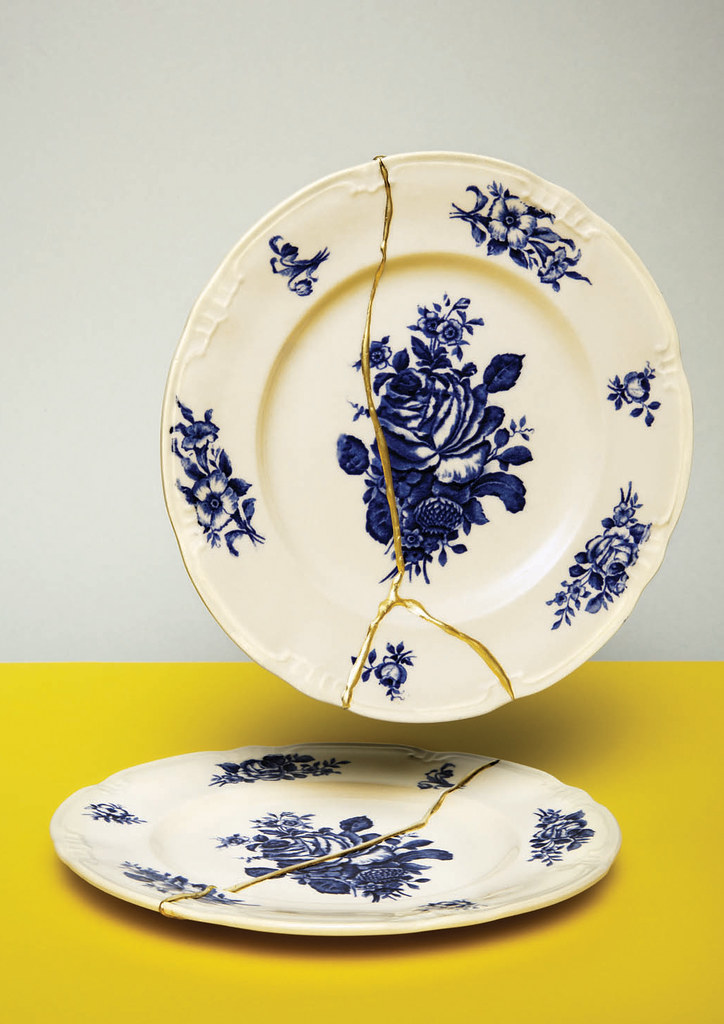
Remember the modern version of kintsugi developed by artist Lotte Dekker for Platform 21's repair exhibit (photo via Ars Electonica's Flikr feed)?
She's selling kits now through her company 
humade, and there's a fab video on ifixit.org.
Project Sugru also 
took a photo of the kit at a Makerfaire in the UK last year.
I wonder if the epoxy is food-safe, or if the repaired plates would be purely decorative?
On Slow Design and Slow Home:
  • Irene Turner has been exploring how 'Cultural Creatives' are creating trends in the housing world. (Sarah Susanka has blogged about this demographic's relationship to their homes, too.) The slow movement, a holistic approach to building design and decor that encourages collaboration between different disciplines, right-sizing, renovation, restoration, green building, and community-building are all trends Irene discussed. I think what we're seeing is that the core values of the slow movement are core values of Cultural Creatives: authenticity, community, ethics, and sustainability.
  • GreenBiz, reporting on a USGBC report, asks, are green buildings safer and more resilient than conventional construction?
  • I'm a big fan of Philips' new dimmable AmbientLED bulbs as the current best-in-class energy-efficient replacement for incandescent bulbs; I've tested one at home and the light it gives is gorgeous, with great colour rendition. However, Tea-Party-affiliated media are running with erroneous talking points and attacking it, Treehugger reports (with the correct energy usage and savings figures). Do you think Philips have a case to sue them?
On Slow Fashion:
On Slow Food:
  • Grain Barge in Bristol, UK are now doing Slow Food Dating events. What a thoughtful twist on speed dating, and a great way to promote slow food in a restaurant setting!
  • “Leaving the table is like leaving a lover. It should be slow." - A meditation on the importance of beautifully set table and other meal-time rituals in Italian culture from Peggy Markel has me renewing my resolution to get a great linen tablecloth and napkins for everyday use.
  • Ever tried eating your weeds? Sustainablog rounded up harvesting tips and 7 recipes for using dandelions.
  • Grist published an important piece on proposed and passed bills in several states that legalize the sale of home-made foods. Hey Canada, do we have cottage food bills yet? No? Let's get on it.
  • Here's a great piece from Slow Food Toronto's Voula Halliday on explaining Slow Food as an elevator pitch.
  • I'm struggling with a kid who doesn't like his food to touch his other food, and refuses almost anything with spice, so I so need to implement the advice in this fantastic article from Dina Rose: Food Culture and What It Means to be "Child-Friendly".  
  • EcoSalon have posted a list of 20 genetically modified foods currently or soon to be for sale. Fascinating reading, and relatively balanced, compared with many of the ridiculously alarmist scare stories I've seen recently. 
Droog used these clever bread boards to stimulate discussion of locavorism at their "Go Slow Cafe"
in New York in Sept 2009 - and the discussion is still ongoing thanks to Pinterest.
Photo by Raphael Brion via Eat Me Daily.
On Slow Living:
On Slow Travel:
On Sustainability:

Tuesday, March 6, 2012

Introducing our new Slow Home

So, we bought a house!

exterior - yes, we just had a snowstorm
living room natural-gas fireplace with stone facing
detail of rail at top of stairs in bonus room
kitchen granite counter and backsplash
one of the small square windows, to show the neo-Craftsman millwork
ensuite tub, showing the maple cabinets and tile used throughout the house
oak floors with a nice dark stain
I took a few photos during the home inspection today. I've tried not to show the current furnishings, out of respect for the prior owner. (I'll share more photos once our stuff has been moved in. Promise.) The house has a bad case of builder beige, but good bones, don't you think?

As you can see, the exterior and interior trim is suggestive of Arts-and-Crafts style, as is the case in several of the new subdivisions being built around Edmonton - and in many other cities, based on what I am seeing online. As a Prairie city that had its first real growth between the World Wars, Edmonton's most coveted central neighborhoods are streetcar suburbs filled with Craftsman bungalows and Four-Squares - many of which were mail-order houses. I once read a reprint of a 1930s Sears kit home catalogue, and it was amazing just how many of the illustrated exteriors were instantly recognizable as homes in Glenora and Strathcona. It makes sense that they'd be mimicked by builders looking to trade on the style's cachet, for buyers who want the look in a larger, newer, less expensive home in the outer-ring suburbs.

So, we'll work with that style, and add Craftsman-style interior trim, built-ins, and hardware (and fix the existing trim, which is a bit too simple and looks clumsy as a result). That will help to add architectural interest and a sense of history to the interior. At the same time as we do that, we'll try to slow down the design of the house, which we score (generously) at 14/20 on the Slow Home Test. Making the home more environmentally friendly, adding better lighting and more built-in storage, creating a proper garden, and giving the neighborhood time to mature and develop more nearby amenities (which are still under construction) will all help to improve that score. It'll never be a 20/20, given its suburban location and total lack of attention to the sun's path and the prevailing winds, but it's "somewhat slow" and it meets all the criteria that I laid out in a recent post.

I'm pleased that the home is faux-Craftsman instead of one of the other styles that are currently en vogue. The Craftsman aesthetic is very in tune with modern Slow Design sensibilities, with an emphasis on honest use of natural materials, connection to nature, artisan workmanship, and human scale that was originally borne of protest against industrialization and mass manufacture. In practice, the kit houses and the furniture and wallpapers and tiles used to decorate them were mass-produced in one of the first examples of democratization of design, and they were marketed by the kit-sellers as modern, luxurious, efficient, hygienic, and convenient. Craftsman bungalows borrowed from traditional Shaker, Japanese, and Bengalese architecture, and featured rooms that were open to one another, an abundance of natural light and natural wood, and the use of art tiles and art glass as durable decorative flourishes. Thoughtfully-designed built-in furniture was used to increase the apparent size of the rooms and to keep the rooms easy to clean. An emphasis on long horizontal lines, square motifs, and simplicity of form makes the architecture read as fairly masculine, which is usually balanced by adding rounded forms in the furniture and lighting, and adding decor showing Art Deco and Art Nouveau influences. (Here's a detailed article discussing Arts-and-Crafts architecture and interior decoration in Nebraska - most of what the author says is also true in Edmonton.)

There are lots of great resources out there for families who are restoring their Craftsman homes, and if I really wanted I could pull out all the stops and make this house as authentic as I wished using those resources. I will not be going with a slavish reproduction of Craftsman style in our new home, but I will let its aesthetic inform the architectural millwork and hardware choices we make. I've started by creating a pinboard of Craftsman reference images (naturally). We take possession at the end of April, so I have about two months to pack and plan things before the move. This should be fun!

Tuesday, February 28, 2012

Slow Home Househunting: Better Not Bigger

I know, I know, it has been forever since I've posted. I've been busy with some other projects, and the big news is that we are house-hunting again, which is time consuming and not ideal blog fodder.

Why move? Much as we love our home, the two-up-one-down arrangement of the bedrooms in our multi-level-split really does not work so well when you have two young children. Neither does our floorplan's disconnection of the backyard from the waking-hours parts of the house, which makes it hard to watch kids playing outside, or barbeque, or entertain. So we're looking for a new place with a more suitable floorplan. We like our neighborhood, an island of walkability with new schools and groceries within an easy bike ride, but unfortunately our in-demand new-urbanist subdivision doesn't have many houses available that will meet our needs. So, we've stretched our search into the neighboring subdivisions (which are also quite walkable, and closer to the protected natural areas in the North Saskatchewan River valley and the Whitemud Ravine) and held our noses over the garage-mahal-ness of most of the views from the curb while we look for the right house.

Our criteria for a suitable slow home for us:
- it has to have at least 3 bedrooms on the same floor, and a 4th space that can act as a guest bedroom when family come to visit from Nova Scotia
- it has to have either large bedrooms or a separate playroom for the kids (who are now old enough to need some privacy while they play)
- it has to have easy access to the backyard from a kitchen - dining - family room area
- it has to have a well-designed kitchen for baking (you'd be amazed how many houses we've looked at that have kitchens with no decent work triangle)
- it has to be enough of an upgrade (in interior finish quality, not in square footage) that it's worth the trouble and expense of moving - although I have discovered that when push comes to shove, more square footage makes a home a 'better investment' and that weighs heavily for my husband
- it has to have a yard suitable for gardening, and we'd prefer some solar exposure so panels can be installed someday
- it needs to be reasonably energy and water efficient, or easily renovated to be made so (Aside: I have learnt during viewings that, locally at least, third-party certifications such as BuiltGreen are viewed by real estate professionals as adding marketability, not investment value, to a home. I wonder how we can turn that around?)
- it needs to not ring too many alarm bells on Slow Home Studio's Slow Home Test checklist
- it needs to (including any immediately needed renos) fit into our budget

So far we have seen what feels like dozens of houses, and seriously considered an early-80s bungalow with sunken living rooms (too much work needed, and the yard was too shady), an almost-new home that backed out onto a park (the kids' bedrooms were too tiny to grow with them), and an early-90s former show home with a ridiculously huge cathedral-ceilinged great room (that had low-e window film that made the whole interior look violet, and would be a substantial investment to scrape off and replace). We ended up deciding to bump up our budget a bit, and now are looking at two almost-new homes built with lots of energy efficiency features that check all our boxes. We've put an offer in on one of them, and are waiting to hear back from the seller. Wish us luck!

Sunday, February 5, 2012

Monthly Slow News Summary: February 2012


Come Up To My Room at Toronto's Gladstone Hotel reliably showcases some great examples of slow design
every year during IDS season. This year's standout was Fugitive Glue's Gaslight, upcycled from retired propane cylinders.
Also shown at IDS12 was Miles Keller's flatpacked plywood Alouette pendant lamp,
inspired by the design of Canada's first satellite. Gorgeous! Via
On Slow Design and Slow Home:
On Slow Fashion:
  • GOOD is starting an Ethical Style column.
  • Source4Style listed their top eight slow fashion pioneers. So inspirational.
  • Aussie blog The Vine followed up on a piece in the Melbourne Review on the trend toward 'Alternative Hedonism' in fashion. What is Alternative Hedonism? It's buying fewer, higher quality, longer-lasting, sustainable, artisan-made items. Gee, that sounds familiar. (The related term 'Hedonistic Sustainability' is being used by architects now. I like how indulgent it feels, but I don't think it'll fly in the bible belt.)
  • Kiwi style blogger Street and City Photos mused that it's time to get back to slow fashion.
  • Fashion United introduced a two-outfits-per-month slow fashion collection from the Netherlands, by Sanne Jansen. The designer's website is still under construction, but hopefully she'll clear up the misconception in the article that she invented slow fashion (dear bloggers: use a search engine before you hit publish).
  • TriplePundit noted that cheap fashion is created by cutting corners on labour conditions at Topshop, H&M, and Forever21, with a lot of links to more in-depth reads.
  • EcoSalon took a look at the pros and cons of H&M's Conscious Collection.
  • A board member of the Ethical Fashion Consultancy wrote an illuminating article for the Guardian on how the changes to supply chains caused by fast fashion have made sustainability more challenging for fashion retailers.
  • Eight years to make two beautiful, completely unwearable garments? Yes. Hmm.
  • Mending got a lot cuter with this roundup of patches from Green Thing.
  • This guy only owns 15 things, and looks like a pampered college kid in the middle of a gap-year backpacking trip across Europe. Wouldn't it be even more inspirational if he looked like a grownup with a job? There are a lots of guys out there with minimalist wardrobes who own a suit and a pair of khakis. I'd like to see what their list looks like.
  • Ecouterre showed us the "Carry-On Closet" capsule collection of multifunctional clothes from two London College of Fashion students, whose slow fashion label Antithesis will launch this fall.
  • Well Spent on why clothes cost what they do, in response to a somewhat misleading infographic from the fast-fashion world.
  • Slow Fashion Forward profiled Halifax's indie boutik collective, a group of five slow fashion designers who are sharing retail space.
On Slow Food:
On Slow Living:
On Slow Travel:
On Sustainability:

Tuesday, January 3, 2012

Monthly Slow News Summary: New Year's Edition


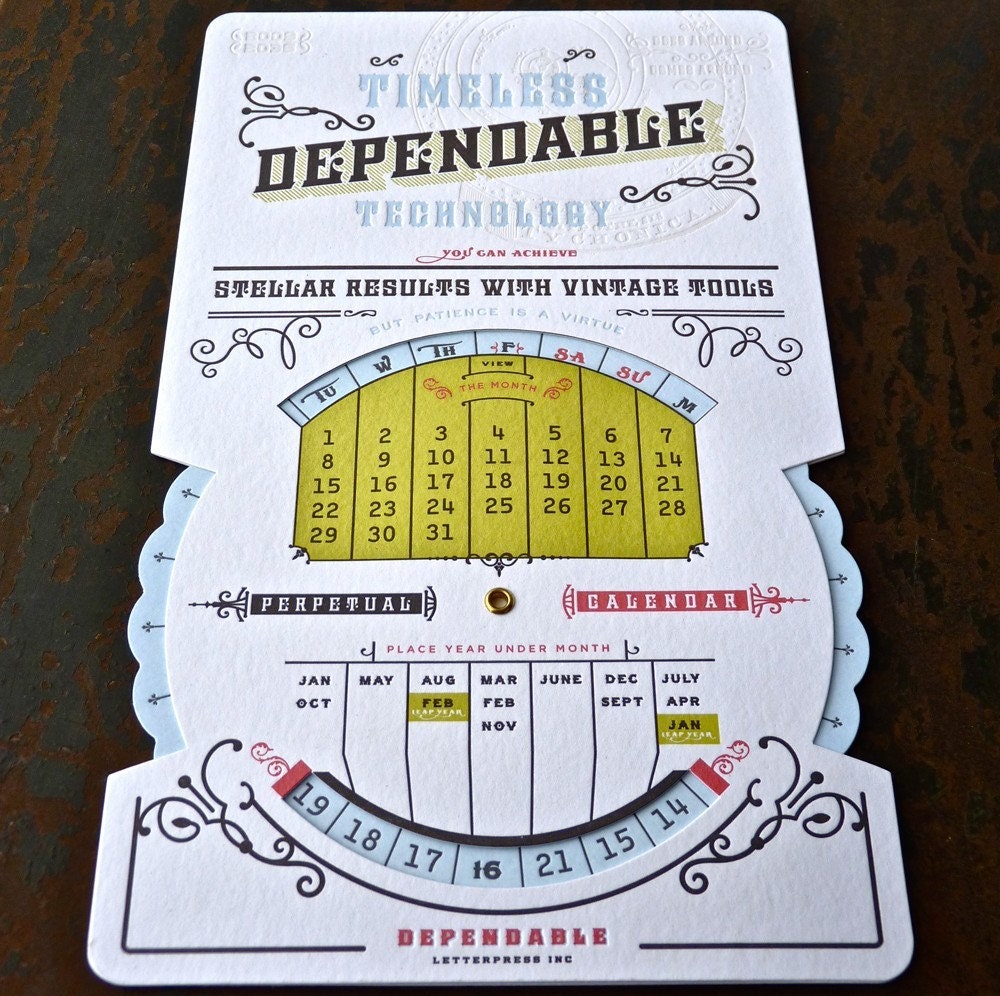
Happy New Year! Right now I am kind of obsessed with this letterpress perpetual calendar I just purchased from San Fran's Dependable Letterpress. So slow tech! There's a beautiful roundup of vintage perpetual calendar designs on flickriver - maybe the brass or wood ones are more your style.

On Slow Design and Slow Home:
On Slow Fashion:
  • Sustainable business strategists BSR are working with the Danish Fashion Institute to explore how conscious consumerism can transform fashion with their Nice Consumer initiative.
  • Customizable jewelry was one of the hot trends of the holidays. 
  • Ecouterre profiled Brookyn Sewn's full-service small-scale local fashion manufacturing model - so inspiring.
  • EcoSalon's stories-of-the-year feature called out trashion as a gimmicky distraction to real progress and noted growing support for the buy local and slow fashion movements.
  • Ecouterre's roundup of eco-fashion predictions for 2012 included an emphasis on artisanship, authenticity, quality, handcrafted, and local production. Sounds pretty slow to me! There are also shout-outs to customizability and 3-D printing, and recognition that the business realities for emerging designers are pretty grim. 
On Slow Living:

The magnificent BrainPickings profiled advice to sink in slowly, a fab poster project from the UK (and yes, you can buy them). This one is 'Take Time' by Temujin Doran.

On Slow Food:
  • Chow had a really interesting article on a possible schism within Slow Food USA over the $5 Challenge and further discussion here. My take: I think the $5 challenge is needed. The popular perception of Slow Food (or even local food) as uber-expensive needs to be changed. The idea that cooking is hard or time-consuming needs to be challenged. Showing that it's pretty easy to whip up a meal with local ingredients that takes as little time and costs the same per person as a fast food or pre-prepared meal, but is both tastier and more nutritious - that's a really worthwhile project. I think it's pretty easy for people who are passionate about food to forget that the average middle-class non-foodie isn't as aware of nutrition or food politics as they are. Lots of us have never really been taught how to cook. Most of us non-foodies (and yes, I count myself as a non-foodie) struggle to get enough veggies and fruit on the table and rely much too heavily on convenience foods, no matter how great our intentions are. We need the kind of inspiration that $5 challenge blog posts bring. I know some are concerned that the $5 challenge could create downward price pressure for local producers, but it's a single meal event. It's not about beating the fast food giants at their own game, it's about getting people to rethink their assumptions about food and cooking in an accessible way, and fostering conversation. As ecosalon point out, the ideas of Slow Food need to reach a much broader consumer audience in order to generate real changes in the industrialized food system, and that's going to take time and lots of little projects like the $5 challenge.
  • The New York Times took a careful look at the increasing unsustainability of organic food that's bound to stimulate a lot of discussion. 
  • Treehugger had an interesting article on Dan Carmody's work in Detroit shows that designing smarter farmers' markets to act as third spaces can stimulate local food production and manufacturing. Oh, and here is a related quote from 1830 about the importance of fairs and market-towns to cottage industries on No Tech. 
  • Slow Food introduced for a Malaysian readership:  http://www.nst.com.my/opinion/columnist/how-our-food-choices-affect-the-world-1.20534
  • Scientific American weighed in on the impracticality of nonseasonal foods and profiled Slow Money.
  • I love the idea of a slow food Preschoolers' Potluck.
  • GOOD commented on the appropriation of the term 'artisanal', noted the trend toward microdistilled alcoholic beverages, and profiled an interesting local food startup that supports Alabama farmers.
  • Design Observer published a thought-provoking piece on Big Food's misdeeds in the global South.
  • Fabulous Edmonton-based food blogger A Canadian Foodie has a fantastic series of posts about food trends for 2012 that she and her international circle of bloggers, writers, and chefs are seeing emerging - you should start here and click through all seven parts. I found it really inspiring how passionate her respondents all are, and how slow food themes like localness, sustainability, heritage varieties, comfort foods, and culinary traditions were mentioned repeatedly, alongside concerns about affordability and accessibility.
On Slow Travel:
  • EcoSalon summed up their favourite destinations covered over the past year.
  • One of the hot travel trends for 2012 will be personalized genealogical and re-enactment tours for travellers looking to explore their family history.
  • The not-for-profit World Shibori Network run slow-cloth themed tours through offshoot program Slow Fiber Studios. Past tours have gone to Japan, India, France, Italy and this year they're planning trips to Japan, France, and Mexico. Hmm, I've always wanted to learn more about natural dye techniques...
On Sustainability and Environment:

Saturday, December 17, 2011

It's My Blogiversary!


The Tortoise and The Hare, bronze on brick, by Nancy Quint Schon.
Copley Square, Boston, Massachusetts. Photo by Wally Gobetz.
One year ago today, I began a blog about the slow movement. My goals were to learn more about how the ideas of the slow movement are being applied in a variety of disciplines, and find ways to apply them in my personal and professional lives. I was embarking on a two-year sabbatical to refine my ideas and aesthetic, with the goal of rewriting my business plan and relaunching my sustainable interior decorating practice as a slow lifestyle business. I wrote,


This lifestyle blog is about slow design, slow homes, slow fashion, slow food, and slow living - and the Big Idea behind them that just might save the world.


I never did really explain that 'might save the world' part, did I? The biggest problems facing the world in the next century are climate change and environmental degradation. We collectively need to change our lifestyles in a holistic way, and stop (literally) burning through carbon-based fuels and other resources. We need to dial back on consumerism and materialism, and reconnect with our communities and ecosystems. We need to do it because we want to, because it feels good and looks great and has all kinds of other benefits, not because we've been guilt-tripped into it. We need to do it because it's part of the 'good life' that we aspire to living. As part of a community of designers, makers, builders, and writers for whom environmental and ethical considerations are synonymous with good design, it is my goal to help build a slower, more sustainable world, to lose the silly granola stereotypes and political baggage, and create a covetable, sensuous, hopeful version of environmental consciousness. That's where the slow movement has an edge on environmentalism (which, let's face it, can be kind of a bummer) - it reaches an audience outside of eco-geeks like me. The slow movement celebrates craftsmanship, tradition, community, and beauty. Slow living is living locally, sustainably, ethically, and authentically. Slow is beautiful. Slow is personal. Slow is stylish. Slow is smart. Slow is sexy.

In short, the slow movement has the potential to be world-changing. I feel so fortunate to have started writing about it and incorporating its principles into my life just as it began to achieve widespread attention. It is really exciting to watch the monthly slow news roundup growing as more blogs about aspects of the slow movement emerge and more mainstream media do articles about it, and it's fascinating to watch the design innovations and new ideas that are coming out of the movement.

In the past year, I have written 35 articles and 11 slow news summaries. I'm so grateful to those of you who have been reading. According to Blogger's stats, you have visited from Canada (18%), the United States (60%), the United Kingdom (7%), Australia (4%), and other countries (11%) including Germany, France, Denmark, Russia, Ukraine, Romania, Puerto Rico, Brazil, Argentina, Chile, Saudi Arabia, India, Japan, and China. (Wow.) About 8% of you are reading on mobile devices of one kind or another. Several of you have reached out on Twitter or by email to speak kindly of what I've written or offer words of encouragement, or shared my writing on Google+ or Pinterest or Twitter (or even your own blogs!), and it means so much to me. Thank you.

The most popular search terms that bring many of you here have surprised me a little (variants on 'Tangled birthday', 'Cardboard Rocket Ship', and 'Project 333'). Here are my ten favourite posts from the past year:
My goals for Sustainable Slow Stylish for the next year are:

1. Make It Prettier. I know my writing style is a bit wordy and academic, and that writing as inspiration finds me works better for me than having a set blog schedule. So, I'll never make a good professional blogger - and I'm perfectly okay with that. However, there are things I can do to make the blog more visually appealing, starting with a redesign (which will also make it easier to navigate), and learning how to take better photographs.

2. Make It Myself. I already have some craft and sewing projects on the go, and several more in the planning stages - I'm terrible about collecting the supplies I need then not following through and finishing the project. However. I really should take a few extra minutes to document and write up my DIY projects - not only so I have blog content, but as a reminder for myself of what I accomplished and how I did it.

3. Make It A Party. Last spring I partnered with a friend to organize a slow-fashion-inspired fundraising party, which will be back next spring as a gender-inclusive sit-down dinner. I have some bicycle event plans up my sleeve, too.

4. Make A Move. We love the house we're in, but we need a home where all the bedrooms are on the same floor and we can see the kids playing the garden while we're working in the kitchen. So, we've been house-hunting in our neighborhood for a home with a floor-plan that works better for our young family, and in preparation for that I have been gradually decluttering and getting organized. I'll be documenting that process along the way, and talking about choosing and decorating a slow home.

5. Make It My Business. I need to get down to brass tacks and write that business plan and figure out how, precisely, I'll incorporate the principles of slow design into my work. I do know that I'm disillusioned with the planned obsolescence that many interior decor business models rely upon; I'm still figuring out how that will change the services I offer or objects I create.

6. Keep It Real. While I haven't ever been dishonest in my writing, I tend not to talk much about my personal life. I suffer from mild depression (who doesn't these days?), and most of my family and my social circle live thousands of miles from me. So sometimes, finding the motivation to write or declutter or make things or exercise or volunteer or make new friends or network is more difficult than it should be. Pushing myself to be a superwoman does not help. Reading blog posts from perky twentysomethings with no responsibilities or baggage that wax poetic about the power of positive thinking does not help. Sometimes I tell myself chocolate helps, but I know I'm lying (*grin*). It's easy to beat yourself up for being human and having a bad day, it's easy to let your idea of normalcy be skewed by the carefully-styled images and how-to articles found on most websites and print magazines, and it's easy to self-censor and self-censure. It's harder to open up and be real. It's harder to be kind to yourself and silence your inner critic. But I think writing about my reality, instead of a fantasy version of slow living, is important. One of the dangers in the aspirational version of magazine and blog writing is that it can make things seem unattainable and exclusive. That's fine, if your goal is to market high-end items to a small number of people based on elitism. However. I don't believe the slow movement is only for those who who have cash and spare time to burn. I think our lives can be authentic and sensible at the same time as they're sensuous and stylish. Watch me prove it.

Thank you again for reading!